Facility Manager HVAC Security That Stops Theft Early
A condenser can be disabled and stripped long before a routine property walk reveals the problem. For a facility manager, HVAC security is not simply about placing a cage around equipment. It is about detecting the actions that occur at the beginning of an attempted theft, alerting the right people, and limiting the downtime, repair costs, and occupant disruption that follow.
Outdoor A/C equipment is often accessible after business hours, behind buildings, on rooftops, beside service corridors, or at vacant sites. That exposure makes condenser protection a facilities issue, a security issue, and a budget issue at the same time. A practical plan accounts for each of those responsibilities without creating nuisance alarms that staff learn to ignore.
Why Facility Manager HVAC Security Requires Early Detection
Copper theft from an air-conditioning system can create costs far beyond the value of the metal taken. A damaged condenser may require coil replacement, refrigerant work, electrical repair, and HVAC contractor labor. If replacement parts are delayed, a facility may also face uncomfortable tenants, interrupted operations, temporary cooling measures, or missed service commitments.
Physical barriers still have a role. Fencing, locked gates, lighting, equipment cages, and controlled access can make a property less convenient to target. But barriers alone do not tell anyone when a theft attempt begins. A determined person may spend time defeating a barrier, while an unsecured or poorly monitored unit can be reached quickly.
The strongest approach combines reasonable physical protection with detection tied to the specific behaviors associated with condenser theft. In many attempts, the person first shuts off electrical power to the unit, then cuts refrigerant lines to remove copper-bearing components. Detecting those conditions early gives the burglar-alarm system an opportunity to draw immediate attention before the loss becomes a major HVAC repair.
Start With a Site-Specific Risk Review
Not every condenser needs the same level of protection. A facility manager should begin by identifying which units would cause the greatest operational impact if damaged. Consider the equipment serving critical areas, units located out of public view, systems at properties with limited overnight activity, and equipment with a history of vandalism or unauthorized access.
Walk the site as it looks after hours, not only during a daytime maintenance visit. Ask whether a person can approach a condenser without being seen, whether lighting is working, and whether landscaping or stored materials create concealment. Check electrical disconnects, gates, roof access, enclosure locks, and the condition of any existing security devices.
Also review what happens after an alarm event. If a monitored burglar-alarm system is already in place, determine whether an outdoor HVAC protection device can communicate through that system. A detection device is only as useful as the response path behind it. The goal is a clear sequence: suspicious condition, alarm activation, notification, and a documented response by the appropriate personnel or monitoring provider.
Monitor Both Power and Refrigerant Pressure
A common mistake is treating an A/C condenser like any other piece of outdoor equipment. General motion detection or video can be helpful, but it may not reliably identify the precise actions that put the system at risk. HVAC-focused security should monitor the equipment conditions most closely associated with a theft attempt.
Power monitoring can identify an unauthorized shutdown at the condenser. That matters because disabling power is often an early step before work begins on the unit. Refrigerant-pressure monitoring provides another layer by identifying the pressure change that can occur when refrigerant lines are cut.
Using both signals is more meaningful than relying on only one. Power loss by itself can result from a legitimate service shutdown or a local utility outage. A pressure change alone needs to be evaluated within the operating conditions of the equipment. Intelligent monitoring is designed to distinguish an intentional A/C shutdown from a broader power interruption, helping reduce false alarms and the potential municipal fines or response costs that can accompany them.
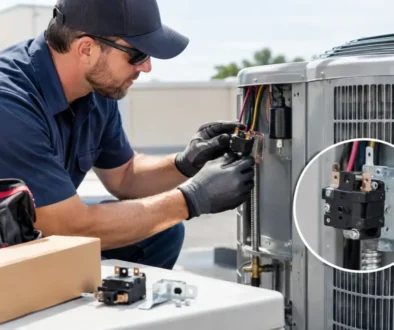
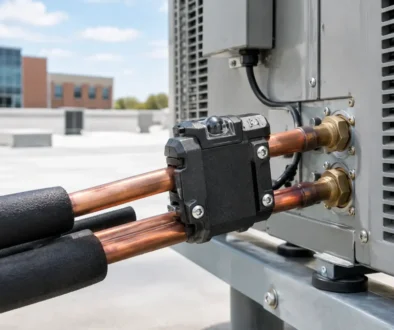
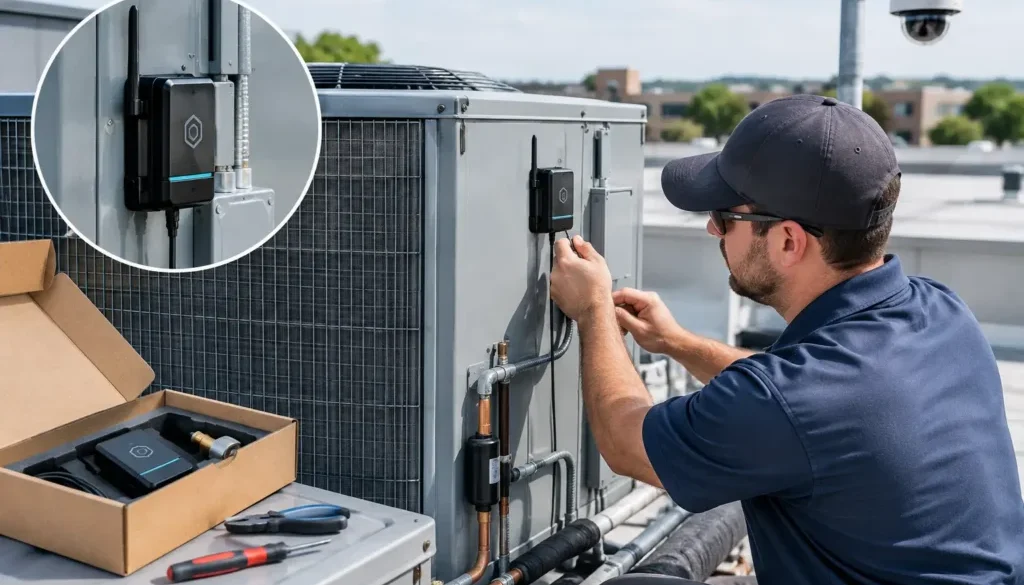
CopperWatcher™ CW-3 uses electrical-power and refrigerant-pressure monitoring to detect these two primary theft-related conditions. It is designed to communicate with an existing burglar-alarm system, allowing the alarm siren to immediately call attention to suspicious activity. For facilities with a compatible alarm infrastructure, this approach can add specialized condenser protection without requiring a separate, standalone alarm system.
Design the Alarm Response Before Installation
Installation should not be treated as the finish line. Before specifying HVAC security equipment, facility teams should decide what an alarm means operationally. The answer may differ between a school campus, retail location, apartment community, house of worship, vacant building, or industrial facility.
First, identify who receives the alarm signal and who can verify the situation. That may include a central monitoring station, on-site security, a property manager, or a designated after-hours contact. Next, establish when an HVAC contractor should be called. A contractor should evaluate any unit suspected of refrigerant loss or physical damage before it is returned to service.
The response plan should also state who can authorize a legitimate shutdown. HVAC technicians, electricians, and maintenance personnel need a simple procedure for placing the system in an approved service condition and restoring protection afterward. When staff do not understand the process, they may bypass security controls permanently to avoid an unwanted alarm. Clear responsibility prevents that shortcut.
Coordinate Security and HVAC Teams
Condenser protection sits between two trades. The alarm contractor or security integrator understands alarm-panel wiring, zones, supervision, and monitoring requirements. The HVAC contractor understands system pressures, service procedures, equipment operation, and the correct handling of refrigerant lines. A reliable installation benefits from both perspectives.
For facility managers, coordination starts with sharing accurate information. Provide the make and location of each condenser, the alarm-panel details, the intended response process, and any site restrictions. Confirm who will perform the physical installation, who will connect the device to the alarm system, and who will handle startup and pressure-switch setup.
This collaboration is especially valuable when equipment is replaced or substantially repaired. A condenser changeout, refrigerant-line modification, or control upgrade may affect sensor placement or settings. Include HVAC security verification in the project closeout process, just as you would verify disconnect labeling, thermostat operation, and alarm-panel communication.
Reduce False Alarms Without Reducing Protection
A security system that alarms repeatedly for ordinary events loses credibility. Yet avoiding false alarms should not mean leaving condensers unprotected. The right balance comes from understanding normal operating conditions and configuring the protection device according to documented procedures.
Utility outages are one example. A facility-wide or neighborhood power interruption is different from an individual disconnect being shut off at a single condenser. Monitoring logic that recognizes this distinction can reduce unnecessary alarms while preserving detection of suspicious local power loss.
Scheduled HVAC service is another example. Put service personnel on notice about the alarmed equipment, document how protection will be placed in service mode if required, and require a final reactivation check. Do not rely on informal verbal handoffs, particularly across multiple shifts or outside contractors.
Facilities should also test alarm communication on a defined schedule. Test after installation, after panel changes, after HVAC modifications, and after any event that requires repair. Record the result, the responsible party, and any corrective action. This is not paperwork for its own sake. It confirms that the detection device, alarm panel, notification path, and field response still work together.
Build HVAC Security Into Preventive Maintenance
Preventive maintenance is the natural place to keep condenser protection visible. During regular HVAC inspections, technicians can note damaged enclosures, exposed wiring, compromised locks, vegetation that blocks visibility, and evidence that equipment has been moved or disturbed. Security checks can be added without turning an HVAC visit into a full security audit.
Facility managers should also track repeat exposure. If one building experiences frequent trespass, damaged gates, or recurring attempts to access equipment, that pattern may justify additional lighting, revised patrols, relocation of materials, or a higher level of alarm integration. The appropriate investment depends on equipment value, site layout, prior losses, and the consequences of cooling downtime.
The objective is not to promise that every theft attempt can be prevented. It is to make the property harder to access, detect suspicious activity as early as possible, and give the facility a defined opportunity to respond before a manageable risk becomes an expensive mechanical emergency.
A well-protected condenser is rarely the result of one product or one policy. It comes from facility, HVAC, and security teams treating outdoor equipment as an operational asset worth watching – before the first line is cut.