Refrigerant Sensor Versus Motion Detector
A refrigerant sensor versus motion detector is not simply a comparison of two alarm devices. For an exposed A/C condenser, it is a decision about what the system is designed to detect: a person near the equipment or the specific actions that can disable and damage it. Motion detection may provide a useful layer of perimeter awareness, but pressure-based refrigerant monitoring can identify a critical event associated with copper theft – cutting the refrigerant lines.
What Each Detection Method Actually Monitors
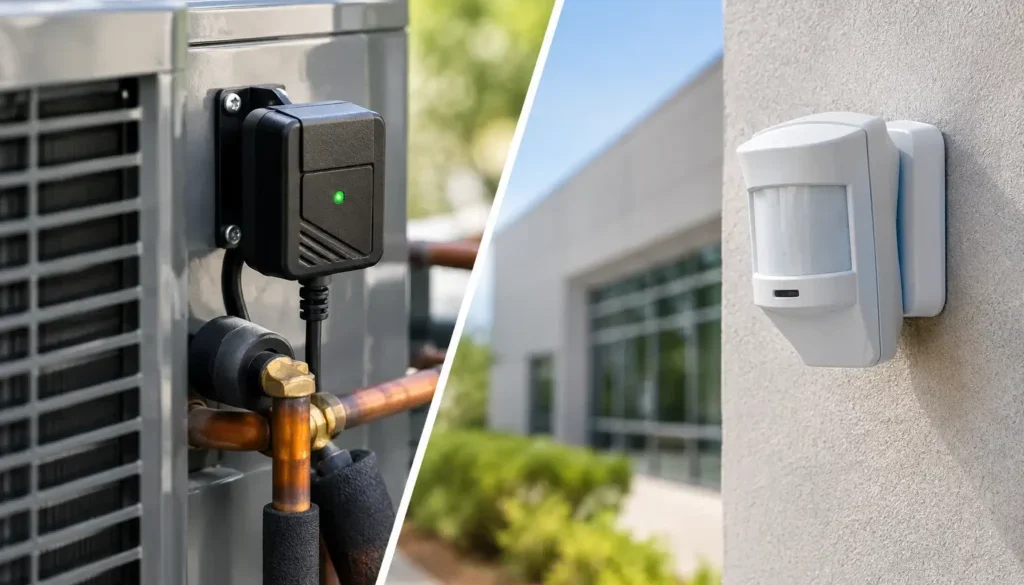
A motion detector watches for movement within a defined area. Depending on the device and installation, it may respond to a person walking near the condenser, someone reaching over a fence, an animal passing through the detection zone, vegetation moving in wind, or activity from maintenance personnel. Its purpose is broad: identify motion before someone reaches protected equipment.
A refrigerant sensor monitors a condition within the A/C system itself. In an A/C theft-protection application, that condition is refrigerant pressure. When refrigerant lines are cut, the resulting pressure change can signal that the equipment has been tampered with. This approach does not depend on seeing an intruder cross a particular detection pattern.
That distinction matters because a condenser can be located in places where motion is common. Multifamily properties, schools, retail locations, churches, and commercial facilities may have foot traffic, landscaping crews, HVAC technicians, delivery activity, wildlife, and nearby public access. A sensor that reacts to every movement can require careful placement and adjustment to avoid nuisance alarms.
Refrigerant Sensor Versus Motion Detector: Detection Timing
Motion detection is generally an earlier warning only when the detector sees the person before work begins on the condenser. That can be valuable when a site has a controlled approach path and the detector can be positioned without frequent non-threat activations. However, a motion device cannot confirm what the person intends to do. It detects presence, not line cutting.
Refrigerant-pressure detection responds later in the sequence, but it responds to a more specific event. When the protected refrigerant line is cut and pressure changes, the alarm condition is tied directly to an action that threatens the equipment. For property managers and security professionals, that specificity can be especially meaningful at locations where ordinary activity around the building makes broad motion detection less practical.
The strongest protection strategy is often not an either-or choice. A motion detector may help alert a system to suspicious activity in a controlled area, while refrigerant monitoring provides equipment-specific detection if an attempt reaches the condenser. The right design depends on site layout, alarm-panel capacity, expected traffic, lighting, fencing, and the consequences of a false dispatch.
Why False Alarms Need to Be Part of the Decision
A security device only helps when the property can rely on it. Repeated nuisance alarms can strain tenant and staff confidence, consume response resources, and potentially create municipal false-alarm concerns. This is where the practical difference between motion and refrigerant monitoring becomes clear.
Outdoor motion devices can be effective, but they require thoughtful installation. A detector aimed toward a walkway, parking area, dumpster enclosure, service entrance, or landscaped area may see legitimate activity. Poorly located units can also react to animals, weather conditions, or movement outside the intended protection zone.
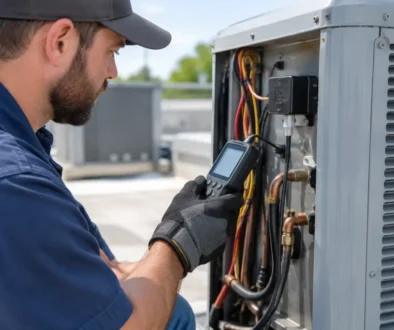
A refrigerant sensor has its own installation requirements. It must be connected and adjusted correctly for the protected A/C equipment, and normal HVAC service procedures need to be understood by the installer and facility team. The goal is not to treat every pressure change as theft. The goal is to configure the system to identify conditions consistent with refrigerant-line cutting while supporting proper service and intentional shutdown procedures.
For sites with existing burglar alarms, integration is often the deciding factor. The preferred solution should communicate an alarm condition to the property’s established alarm infrastructure, allowing the siren and reporting path already in place to do their jobs. That avoids treating A/C protection as an isolated device with no meaningful response plan.
The Importance of Monitoring Power and Pressure
Copper theft attempts commonly involve more than one action. A thief may shut off electrical power to the condenser before cutting the copper refrigerant lines. Monitoring only motion leaves the system focused on activity around the unit. Monitoring only power loss can create another problem: a local electrical interruption does not necessarily mean someone is attempting theft.
This is why systems that evaluate both power and refrigerant pressure can provide a more intelligent response. CopperWatcher™ CW-3 monitors electrical power and refrigerant pressure at the A/C unit, addressing the primary actions associated with a theft attempt. Its design also helps distinguish an intentional A/C shutdown from a local power outage, which is essential for reducing unnecessary alarms.
For a property with multiple condensers, this approach can be particularly useful. A facility manager needs to know whether a unit has simply lost utility power, has been intentionally turned off for service, or has experienced a condition that requires immediate alarm attention. The more accurately those conditions are separated, the more useful the security response becomes.
When a Motion Detector Is Still a Good Fit
Motion detection should not be dismissed. It can serve an important role where a condenser sits in a narrow, controlled access area and there is little legitimate traffic. For example, a fenced equipment yard with a single entrance may allow a properly installed outdoor motion detector to provide an early warning before someone reaches the A/C equipment.
Motion detection can also complement cameras, lighting, access control, and perimeter alarm devices. If the property’s objective is to monitor a larger exterior area, a motion sensor may help identify activity beyond the condenser itself.
The trade-off is that its value depends heavily on the environment. A busy apartment courtyard, a rear retail service lane, or a school campus with evening programs can produce regular motion that has nothing to do with A/C theft. In those cases, a motion detector may be better used as a secondary layer rather than the primary means of protecting the condenser.
When Refrigerant Monitoring Makes More Sense
Refrigerant monitoring is well suited to properties that need protection focused on the equipment and the consequences of a theft attempt. It is especially relevant when condensers are exposed but the surrounding space has too much normal activity for broad motion detection to be dependable.
Consider the operational cost of an A/C theft incident. The loss is not limited to copper. Property owners may face coil replacement, refrigerant-related repairs, labor, equipment downtime, insurance claims, occupant discomfort, and disruption to business or building operations. An early alarm response can help draw attention to an attempt before damage becomes more extensive, but no device can guarantee that every theft will be prevented.
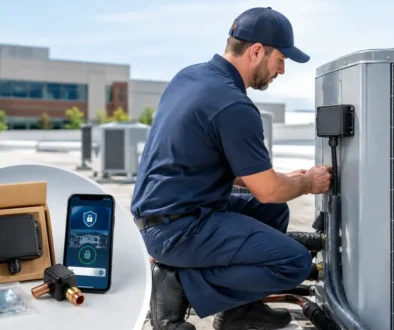
For alarm contractors and HVAC contractors, refrigerant-pressure detection also creates a focused opportunity to add protection without replacing the customer’s entire security system. The installation should be performed according to product documentation, alarm-panel requirements, and appropriate HVAC practices. Clear coordination between the security and mechanical sides of the project is part of a reliable result.
Choosing Protection for the Actual Site
The best choice starts with a site assessment, not a generic product category. Look at where the condenser is located, how someone could approach it, what legitimate activity occurs nearby, whether an existing burglar-alarm panel is available, and how the facility handles scheduled HVAC service.
If the area is quiet and access is tightly controlled, motion detection may provide useful advance notice. If the area experiences frequent ordinary movement, equipment-specific refrigerant monitoring can offer a more targeted alarm condition. If the property has experienced repeat exposure or manages high-value cooling equipment, combining layers may be appropriate.
Protecting outdoor A/C equipment works best when the alarm system is designed around the actual theft method, not just the area surrounding the unit. A motion detector can tell you that something moved nearby. Refrigerant and power monitoring can help identify when the condenser itself is being placed at risk, giving the existing burglar-alarm system a reason to respond when it matters most.