Hardwired Condenser Sensor Review for Protection
A hardwired condenser sensor review should begin with the moment that matters most: before a missing coil becomes an emergency HVAC repair, an insurance claim, and days of uncomfortable downtime. Outdoor condensers are exposed, valuable, and often unattended after business hours. A security approach that notices only after the equipment is gone has already missed its best chance to protect the property.
For facilities with an existing burglar-alarm system, a hardwired condenser sensor can provide a focused layer of detection at the A/C unit itself. The strongest designs monitor the specific actions associated with an attempted condenser theft, then communicate that event to the alarm system so the siren can create immediate attention. This is a practical security application, but results depend on what the sensor monitors, how it handles normal HVAC operation, and whether installation is matched to the site.
What a hardwired condenser sensor should detect
A condenser theft attempt generally involves more than one action. A person may shut off electrical power to reduce risk and noise, then cut refrigerant lines to remove copper components. A sensor that observes only one condition can leave a gap in protection.
That is why a meaningful hardwired condenser sensor review should look beyond a basic enclosure switch or an ordinary motion device. Those devices may have a place in a broader security plan, but they do not necessarily identify the conditions most closely tied to an A/C theft attempt. Motion around an operating condenser can be routine. A cabinet door can be opened for legitimate service. Neither event alone confirms that refrigerant lines are being cut.
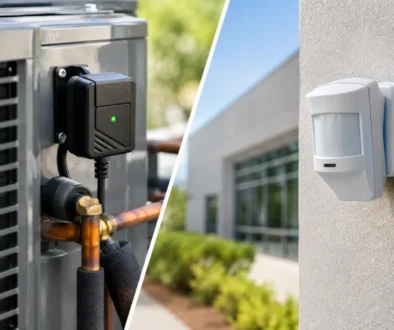
The CopperWatcher CW-3 is designed to monitor both electrical power and refrigerant pressure at the condenser. Monitoring power helps identify an unauthorized shutdown. Monitoring pressure provides a way to identify a condition associated with a cut refrigerant line. Together, these inputs focus detection on the actual equipment and the methods commonly used to disable and remove it.
This dual-condition approach is particularly relevant at retail sites, schools, houses of worship, multifamily communities, vacant properties, and commercial facilities where replacement cost is only part of the loss. A disabled unit can affect occupants, operations, inventory conditions, and the workload of maintenance teams.
Why hardwired alarm integration matters
A sensor is only useful if it can trigger a timely response. Hardwired integration is a major advantage when a property already has a monitored or local burglar-alarm system. Rather than requiring a separate notification platform, the condenser sensor can communicate with the existing alarm infrastructure.
When suspicious conditions are detected, the alarm system can activate its siren. That immediate audible response is valuable because it draws attention while the attempted theft is still underway. It also allows the property to use alarm-system practices that are already familiar to staff, security providers, and alarm contractors.
Hardwired integration has practical benefits beyond response speed. It avoids relying on a separate battery-powered device at an exposed outdoor location, and it allows contractors to incorporate condenser protection into a broader security scope. For a facility manager, that can mean fewer standalone devices to supervise and a clearer path for service, testing, and documentation.
Still, integration should be planned, not assumed. The sensor does not replace the property’s burglar-alarm panel, monitoring arrangement, site lighting, physical barriers, or HVAC maintenance program. It adds specialized detection at a vulnerable asset. Alarm contractors should confirm the appropriate panel connection, supervision requirements, zone programming, and reporting behavior before placing the system into service.
The value of distinguishing a shutdown from an outage
One of the most important details in this category is false-alarm control. Condensers can lose power for legitimate reasons, including a local utility outage. If every power loss produced an alarm event, a property could face nuisance dispatches, reduced confidence in the system, and possible municipal false-alarm consequences.
A well-considered hardwired solution accounts for the difference between an intentional A/C shutdown and a broader power interruption. The CW-3 is designed with intelligent monitoring intended to make that distinction. That is not a minor feature. A system that alarms only when conditions point to an actual theft concern is more useful to property owners and more credible to the people expected to respond.
This does not eliminate the need for proper startup and testing. Site conditions vary. A contractor should verify how the condenser is powered, whether the disconnect is accessible, how the alarm panel interprets the output, and whether the pressure-sensing setup is appropriate for the equipment being protected.
Installation factors that deserve close attention
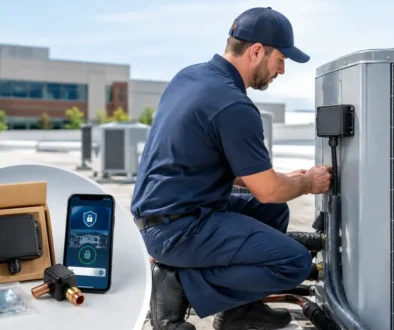
The quality of a condenser sensor installation affects both protection and reliability. This is not a device to treat as an afterthought at the end of an HVAC replacement or alarm retrofit. Before installation, the contractor should understand the condenser location, electrical disconnect arrangement, refrigerant-line routing, alarm-panel capacity, and the property’s normal operating schedule.
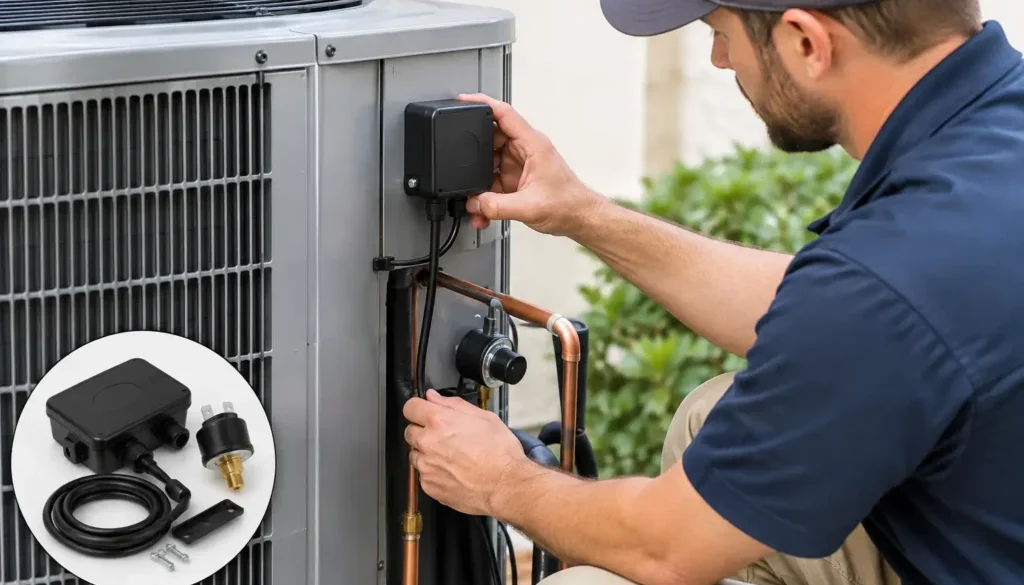
Pressure-switch setup is especially important. The sensor must be connected and configured in accordance with the product documentation and the HVAC equipment’s requirements. Refrigerant work should be performed by qualified HVAC professionals. Alarm wiring and panel programming should be completed by qualified security professionals when required. On sites where one company handles both disciplines, coordination is simpler. Where separate HVAC and alarm contractors are involved, a clear division of responsibility prevents missed details.
Physical placement also matters. The installation should support monitoring without interfering with normal service access. Outdoor wiring should be protected appropriately, and the work should be documented so future service technicians understand what is connected to the condenser and why. A clean handoff protects the customer from accidental bypasses or confusion during later maintenance.
After installation, the system should be tested as a complete chain: condenser condition, sensor response, alarm-panel input, siren behavior, and any monitoring communication used by the property. Testing should also include normal operations where appropriate, such as approved shutdown procedures, so the owner understands how authorized HVAC service is handled.
Who benefits most from this approach
Hardwired condenser monitoring makes the most sense where a coil or condenser loss would create a meaningful financial or operational problem. That includes sites with multiple rooftop or ground-level units, equipment positioned behind buildings, properties that are vacant overnight, and locations with prior exposure to theft or vandalism.
For homeowners, the decision often depends on equipment visibility and the presence of a compatible alarm system. For commercial and multifamily properties, the business case is often clearer because one event can affect numerous occupants and disrupt operations. Schools, religious institutions, and nonprofit organizations may also benefit from a preventive approach that protects limited maintenance budgets from an avoidable capital expense.
For contractors, the opportunity is equally practical. A hardwired sensor can be specified during an alarm upgrade, a condenser replacement, new construction, or a property-wide risk review. It gives security integrators and HVAC professionals a defined way to address A/C theft exposure without asking the customer to replace the burglar-alarm system already in place.
The trade-offs to consider before specifying
A hardwired system requires planning and professional installation. That is a trade-off compared with a simple standalone device that can be mounted quickly. But the additional effort supports direct alarm integration and equipment-specific detection, which are often more valuable at higher-risk or higher-consequence sites.
Cost should also be viewed in context. The relevant comparison is not only the price of the sensor. It is the potential expense of coil replacement, refrigerant-related repairs, labor, downtime, tenant complaints, business interruption, and repeated vulnerability after the repair is complete. No security product can promise to prevent every theft attempt, but earlier detection can give a property a better opportunity to interrupt the event before the loss becomes extensive.
A hardwired condenser sensor is most effective when it is part of a deliberate protection plan: secure the equipment area where practical, maintain the alarm system, establish clear service procedures, and test the system after HVAC or security work. The right installation does more than watch an A/C unit. It gives the property a chance to respond while that unit is still where it belongs.