Refrigerant Line Protection Guide for A/C Theft
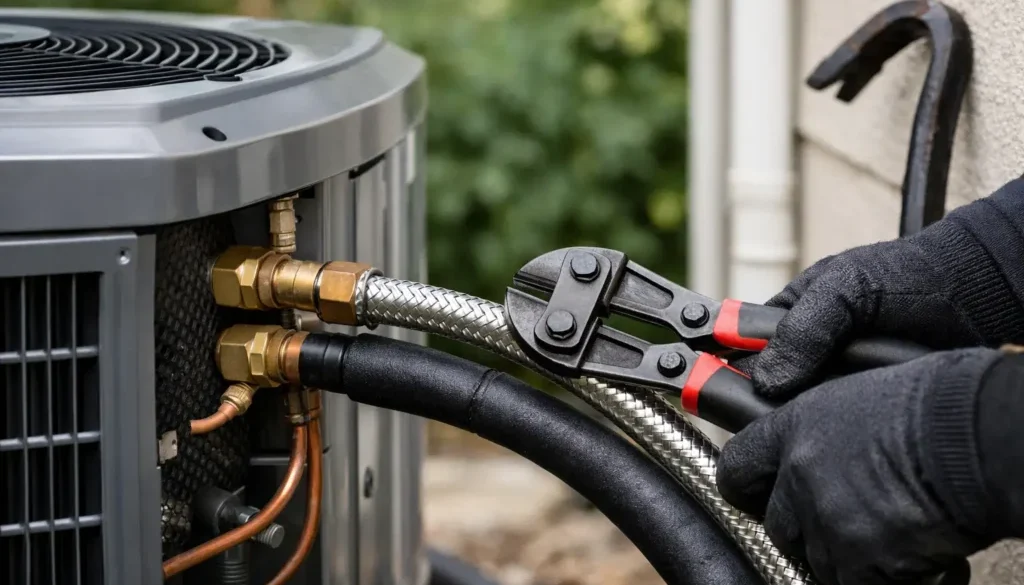
A thief can disable an outdoor condenser in minutes by shutting off power and cutting the copper refrigerant lines. The refrigerant line protection guide below focuses on the point where a nuisance crime becomes an expensive operational failure: the exposed equipment, the vulnerable line set, and the delay before anyone knows the unit has been compromised.
For a property owner or facilities manager, protecting refrigerant lines is not simply a matter of preventing scrap-metal loss. A cut line can release refrigerant, damage the condenser and coil, interrupt cooling for tenants or customers, create safety concerns around a disabled site, and leave the property exposed to repeat attempts. Effective protection combines physical resistance with immediate detection and a response that brings attention to the unit before the thief can finish the job.
Why Refrigerant Lines Are a High-Value Target
Copper refrigerant lines connect the outdoor condensing unit to the indoor coil. They are accessible, recognizable, and contain copper with scrap value. At many properties, the lines run only a short distance from a parking lot, alley, rear entrance, rooftop access point, or dark perimeter. That convenience is exactly what makes them attractive to thieves.
The loss is rarely limited to the copper removed from the site. A thief may cut both lines, damage electrical connections, bend coil fins, destroy service valves, or leave the condenser unusable. Replacement can involve an emergency HVAC call, refrigerant recovery or replacement, new line-set work, electrical repairs, system testing, and possible equipment replacement if matching components are no longer available.
Sites with several condensers have an added exposure. A thief who succeeds once may return, target adjacent units, or share knowledge about a location with others. This is why repair-only thinking is costly. Restoring the equipment without changing the conditions that allowed the theft can invite another loss.
Refrigerant Line Protection Guide: Start With Site Exposure
Protection should match the actual exposure of the equipment. A locked, illuminated condenser inside a monitored service yard does not face the same risk as a unit behind a vacant retail building or along the unobserved side of a multifamily property.
Walk the site after normal business hours if possible. Look at the condenser from the approach a trespasser would use. Can someone park nearby without being seen? Is the disconnect readily accessible? Are refrigerant lines exposed at ground level? Is there a fence gate that is routinely left open for vendors? Are there cameras that record the area but do not provide a live response?
Document the units most exposed to concealment and rapid access. This often includes equipment behind dumpsters, near loading areas, at the rear of schools and churches, beside vacant suites, and along long exterior walls with limited lighting. Rooftop equipment can also be at risk when roof access is weak or adjacent buildings provide an easy entry point.
A useful assessment considers three moments in an attempt: approach, power shutdown, and line cutting. Good protection makes approach more visible, makes access slower, and triggers an alarm at the first meaningful sign that the HVAC equipment is being attacked.
Use Physical Protection to Slow Access
Physical barriers still matter. Their job is to add time, noise, and difficulty, not to create false confidence. A determined thief with tools can defeat many guards, cages, and fasteners. The right barrier can nevertheless push an offender toward an easier target or give an alarm system more time to generate a response.
A well-designed condenser cage should be securely anchored and sized to permit normal HVAC service. It needs sufficient clearance for airflow and maintenance access, while preventing easy reach to the refrigerant connections, coil, and electrical components. Avoid designs that leave the line set fully exposed outside the cage or can be opened quickly with common hand tools.
Line-set guards and metal conduit-style covers can reduce direct access to copper where it leaves the unit or travels along a wall. Their effectiveness depends on installation quality. A loosely fastened cover, lightweight material, or exposed end may be removed quickly. Contractors should also avoid routing that creates sharp bends, restricts service access, or risks damage to insulation and lines during maintenance.
Protect the electrical disconnect as part of the same plan. Since shutting off power is often the first action in a theft attempt, a lockable disconnect enclosure or protected disconnect location can add another obstacle. It should remain code-compliant and accessible to authorized service personnel. A barrier that frustrates legitimate maintenance will eventually be bypassed or left unsecured.
Lighting, fencing, controlled gates, and clear visibility support these measures. They are helpful layers, but they are not substitutes for detection. Video footage may assist an investigation after the equipment is gone. It does not necessarily stop the cut from happening.
Detect the Actions That Signal a Theft Attempt
The most effective systems focus on what a thief must do. To remove copper from an operating air-conditioning system, the offender generally needs to disable power and cut or depressurize the refrigerant circuit. Monitoring these actions provides earlier and more relevant detection than relying only on a general motion sensor near the equipment.
Power-loss monitoring alone has limits. A conventional power-loss alarm may activate during a utility outage, tripped breaker, scheduled shutdown, or maintenance event. That can create nuisance alarms, unnecessary dispatches, and potential municipal false-alarm fines. The detection logic must distinguish a local equipment shutdown from a broader loss of power whenever possible.
Pressure monitoring addresses the refrigerant side of the attack. When a line is cut, system pressure changes rapidly. Used with power monitoring, pressure sensing can identify the sequence associated with a true compromise rather than treating every electrical interruption as a theft event.
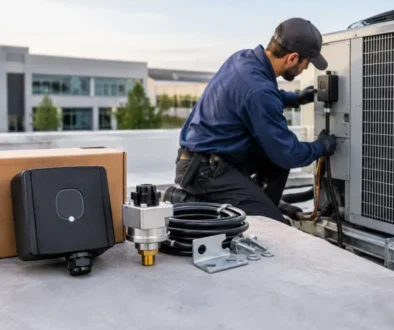
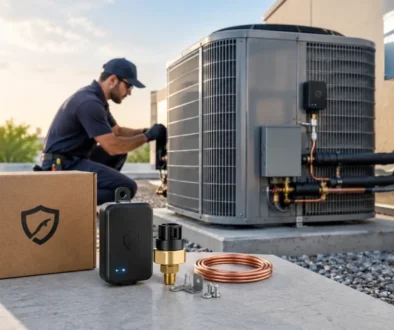
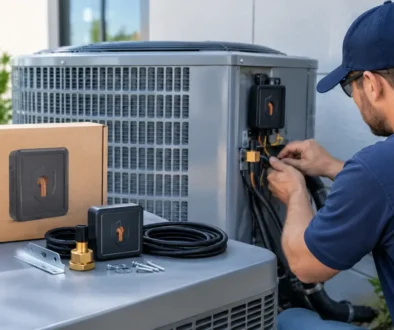
CopperWatcher CW-3 is designed around this two-condition approach. It monitors electrical power and refrigerant pressure at the A/C unit, then communicates compromised conditions to the property’s existing burglar-alarm panel. When detection criteria are met, the panel’s audible siren can draw immediate attention to the attempt. This approach preserves the value of established alarm infrastructure while focusing detection on the equipment and actions most closely tied to condenser theft.
Detection configuration should account for the property’s operations. HVAC and alarm contractors need to establish how authorized shutdowns, maintenance, seasonal service, and alarm-panel arming schedules will be handled. The objective is straightforward: routine work should not generate avoidable alarms, while an after-hours power interruption followed by pressure loss should not go unnoticed.
Coordinate HVAC, Alarm, and Property Teams
Refrigerant line protection fails when it is treated as only an HVAC issue or only a security issue. The HVAC contractor understands equipment condition, refrigerant circuit access, service requirements, and proper placement of line protection. The alarm contractor understands panel zones, supervision, annunciation, and local alarm practices. The property team controls access, schedules, lighting, keys, vendor procedures, and incident response.
Before installation, identify the equipment to be protected, the responsible contacts, and the expected response when the system alarms. For a staffed facility, that may mean security or maintenance personnel verify the area while following site safety procedures. For an unstaffed property, it may involve central-station monitoring, law enforcement notification, or a designated management contact. The response plan should be realistic for the property, especially after hours.
After installation, test the system with the appropriate licensed professionals. Confirm that a valid alarm condition reaches the burglar-alarm panel, activates the intended notification path, and is clearly identified by the people expected to respond. Record service instructions so an HVAC technician does not inadvertently disable protection during routine maintenance.
This coordination also helps avoid a common mistake: installing a cage after a theft, then leaving the disconnect, line set, alarm zone, or perimeter access unchanged. A visible cage may alter the method of attack without solving the exposure.
Maintain Protection After the Initial Installation
A protection plan should be reviewed whenever equipment is replaced, the site is remodeled, occupancy changes, or a theft attempt occurs. New condensers may have different line routing. Construction fencing can create concealment. A vacant suite can change nighttime activity around the equipment. Even a landscaping change can block a camera view or create cover near a condenser.
During scheduled HVAC service, inspect protective covers, cage anchors, fasteners, gates, disconnect enclosures, and exposed line sections. Look for tampering, loose hardware, corrosion, cut insulation, or signs that someone has tested access. Alarm personnel should verify that power and pressure detection remain connected and that panel programming still supports the intended response.
If an attempted theft occurs, preserve evidence and make repairs safely, but also use the event to improve the plan. Review how the offender approached the unit, whether the alarm activated, how long response took, and which physical controls were bypassed. That information is more valuable than simply replacing damaged copper and returning the property to its previous condition.
The practical goal is not to make an outdoor condenser invisible or indestructible. It is to make the theft attempt harder, louder, and more likely to be interrupted before a cut refrigerant line becomes another costly HVAC emergency.