AC Equipment Protection Guide for Property Owners
Outdoor condensers are easy to overlook until they are disabled, damaged, or missing critical copper components. A sound AC equipment protection guide starts with a practical fact: a fence, a lock, or a warning sign may slow an intruder, but no single measure protects every property. The most effective approach combines visibility, physical delay, early detection, and a response plan that fits the building’s existing alarm infrastructure.
For a retail site, school, apartment community, house of worship, vacant building, or home with exposed equipment, the goal is not to create an impenetrable enclosure. It is to make the equipment harder to access, detect suspicious activity as early as possible, and bring attention to an attempted theft before a minor intrusion becomes an expensive HVAC outage.
Start With the Equipment and the Property
Every protection decision should begin at the condenser, not with a generic security checklist. Document the number of units, their location, their accessibility from public areas, and whether shrubs, walls, dumpsters, or parked vehicles provide concealment. Also note where refrigerant lines enter the building and where the electrical disconnect is located. Those details determine both the likely approach to the unit and the safeguards that will be practical to maintain.
A ground-level condenser behind a building has different exposure than a rooftop unit, but neither should be treated as automatically secure. Rooftop equipment may be less visible from the street, yet it can also be less visible to staff and neighbors. Units behind gates may benefit from physical separation, while equipment beside an alley or vacant lot may need stronger detection and lighting.
Property managers should also review what happens after hours. A location with regular overnight activity has natural observation. A facility that closes at 5 p.m. and remains unoccupied through the weekend needs a deliberate plan for alerts, keyholder response, and alarm monitoring.
Physical Protection Should Delay Access
Physical barriers remain a useful first layer because they add time, effort, and visibility to an attempted theft. Equipment cages, guards, secured gates, and strategically placed fencing can reduce casual access when they are correctly specified for the unit and maintained over time.
The trade-off is airflow and service access. A poorly designed cage can restrict condenser performance, complicate HVAC maintenance, or create a frustrating work area for technicians. The enclosure should provide adequate clearance for airflow and allow legitimate service personnel to reach disconnects, panels, and service connections without dismantling the protection system. HVAC input is essential before a barrier is installed.
Placement matters as much as the barrier itself. Avoid creating hidden corners that conceal activity from the building or neighboring properties. Keep vegetation trimmed, remove stored materials that offer cover, and consider how exterior lighting reaches the equipment. Motion-activated lighting can improve visibility, but it should support a larger protection plan rather than serve as the only control.
Warning signage can reinforce that the location is monitored, particularly when paired with an actual alarm system. Signs alone do not detect a line cut or power shutoff, so they should never be mistaken for active protection.
Why Early Detection Changes the Outcome
Copper theft from air-conditioning equipment commonly involves actions that occur before major loss is complete. An intruder may shut off electrical power to the condenser and cut refrigerant lines to access copper components. Detecting those conditions early creates an opportunity for the existing alarm system to respond while activity is underway.
This is the difference between documenting a loss after the fact and designing a system intended to interrupt the attempt. Cameras can provide valuable evidence and situational awareness, but they do not necessarily create an immediate local response. Standard door contacts and motion detectors may not protect an exterior condenser directly. A dedicated AC protection device addresses the equipment and theft method itself.
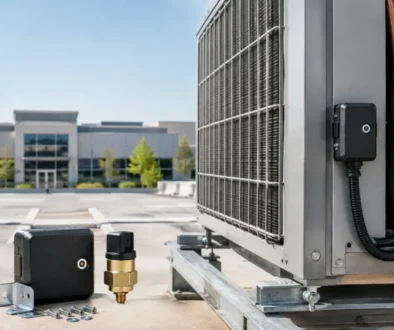
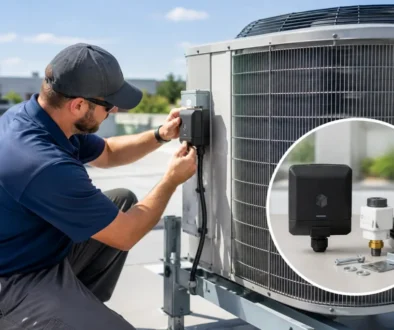
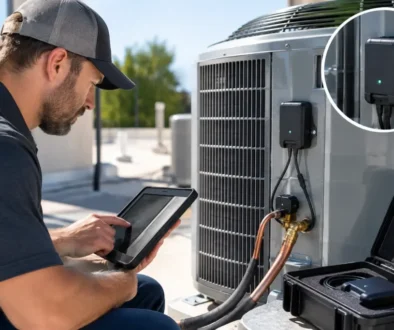
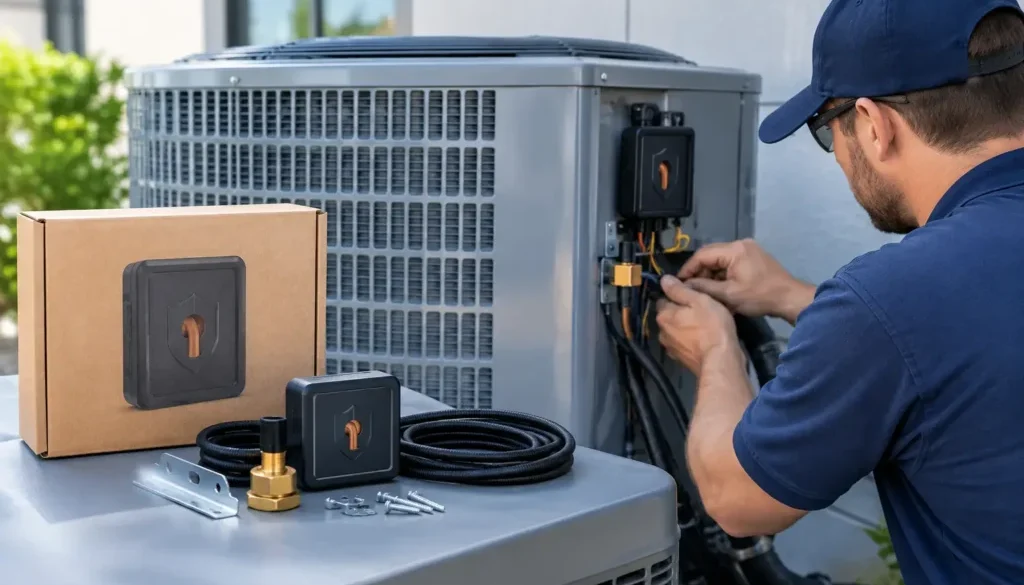
CopperWatcher™ CW-3 monitors electrical power and refrigerant pressure at the A/C unit, then communicates suspicious conditions to the property’s existing burglar-alarm system. This approach is designed to recognize the two primary actions associated with condenser theft attempts: shutting off power and cutting refrigerant lines. When the alarm siren activates, it can draw immediate attention to the attempted theft.
Early detection is particularly valuable at properties where a damaged condenser would affect tenants, customers, students, patients, or operations. Coil replacement and refrigerant-related repairs can involve more than a single service call. There may be downtime, scheduling pressure, insurance documentation, occupant complaints, and follow-up work to restore reliable cooling.
AC Equipment Protection Guide: Use the Existing Alarm System
An A/C theft protection strategy should complement a complete burglar-alarm system, not replace it. The property may already have intrusion detection, an alarm panel, professional monitoring, cameras, access control, and established keyholder procedures. Integrating condenser protection with that infrastructure gives the equipment a place in the security plan instead of creating a separate device that no one actively manages.
For alarm contractors and security integrators, the critical questions are straightforward: What alarm zone will receive the supervisory condition? How should alarm reporting be configured? Who receives the signal, and what action is expected after an event? The final installation should be documented clearly so future service personnel understand the relationship between the HVAC equipment and the alarm system.
For property owners, the key issue is accountability. Verify that the system is armed when the facility is closed, that monitoring information is current, and that designated contacts understand an alarm related to exterior HVAC equipment. A siren can create immediate attention, while monitoring and response procedures ensure the signal does not become an ignored event.
Reduce False Alarms With Thoughtful Setup
A protection system must be responsive without treating every normal operating condition as a theft event. HVAC equipment is routinely shut down for scheduled service, seasonal changes, repairs, and replacement. Local electrical outages can also affect multiple systems at once. If these conditions produce recurring nuisance alarms, people may lose confidence in the system or face avoidable costs.
That is why installation and configuration deserve the same attention as the device selection. The protection method should distinguish an intentional A/C shutdown from a local power outage whenever the system design supports that determination. Pressure sensing must be set up according to the equipment and documented procedures, and alarm professionals should test the complete signal path from the condenser to the panel.
Before leaving the site, the installer should coordinate with the HVAC contractor or facility representative on normal shutdown procedures. If maintenance requires the unit to be powered down or serviced, personnel need to know how to place the associated protection zone in the appropriate state and restore it afterward. Clear procedures prevent accidental dispatches and help preserve reliable protection.
Build Protection Into Maintenance and Replacement Work
The best time to improve condenser protection is often during planned HVAC work. When a unit is being replaced, relocated, or serviced, access is already available and the property can evaluate line routing, disconnect placement, lighting, equipment pads, cages, and alarm integration together. Waiting until after a theft attempt may mean rushed decisions during an uncomfortable outage.
Facility teams should include exterior HVAC security in routine inspections. Look for damaged fencing, loose hardware, overgrown landscaping, obstructed lighting, exposed wiring, and changes in nearby access routes. A new dumpster, construction activity, or a gate left permanently open can change the risk profile without anyone making a formal security decision.
It also helps to keep current records. Maintain equipment serial numbers, photographs, service histories, alarm-zone details, and the names of HVAC and alarm providers. These records support faster service coordination after a problem and make it easier to protect replacement equipment correctly.
Choose the Right Level of Protection
Not every property needs the same design. A single residential condenser visible from a well-lit backyard may need a different combination of controls than multiple units behind a shopping center or a vacant commercial building. Budget, exposure, existing security infrastructure, and the operational impact of HVAC downtime all matter.
The mistake is treating visible equipment as a maintenance issue only. Condensers are valuable operational assets, and their protection deserves coordination between property management, HVAC service, and alarm professionals. When those teams work from the same plan, physical safeguards and early detection can support each other instead of leaving gaps.
A protected condenser is not simply one behind a cage or under a camera. It is one the property can see, monitor, maintain, and respond to with confidence when suspicious conditions occur.