Commercial Condenser Protection Guide for Facilities
An outdoor condenser can become a major operating problem long before anyone notices the unit is not cooling. This commercial condenser protection guide helps facility teams protect exposed A/C equipment from copper theft and vandalism while keeping security procedures practical, responsive, and compatible with normal HVAC operations.
For a retail site, school, apartment community, place of worship, or vacant building, the cost is rarely limited to a damaged condenser. A theft attempt can mean emergency HVAC service, refrigerant loss, coil replacement, interrupted business, uncomfortable occupants, and a difficult insurance claim. Protection works best when it is planned as part of the property’s existing security and maintenance program, not added after a loss.
Start With the Condensers That Create the Highest Exposure
Not every outdoor unit carries the same level of risk. Walk the property with both the facility manager and the alarm or HVAC contractor. Look at where equipment sits, what can be seen from public areas, and how quickly a person could reach the unit without being noticed.
Units behind a building, along a dark side yard, on an unfenced roof access path, or beside an alley generally deserve closer attention than equipment visible from an occupied office or a well-traveled entrance. Vacant spaces, seasonal buildings, and properties with limited overnight activity also need a different protection plan because there may be no staff present to notice a problem quickly.
Consider the full equipment layout, not only the condenser cabinet. Refrigerant lines, electrical disconnects, line-set runs, gate access, and nearby concealment all affect exposure. A locked enclosure can discourage casual access, but it may not address the point at which copper lines can be reached or the time it takes for someone to recognize a theft attempt.
Build Protection in Layers, Not Around One Device
Physical barriers, lighting, surveillance, alarm monitoring, and maintenance each serve a different purpose. The right combination depends on the property, budget, equipment layout, and the ability to respond after an alarm condition.
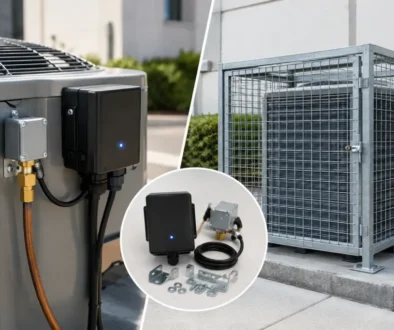
A cage or security enclosure can make access more difficult. It should be designed so technicians can safely service the unit and so airflow is not restricted. Poorly selected barriers can create maintenance headaches, interfere with manufacturer clearances, or encourage workarounds such as leaving access points unsecured. Before installation, have the HVAC contractor confirm service access and operating clearances.
Lighting and visible cameras improve awareness and may help property teams review activity after an incident. They are valuable layers, but they do not automatically create an immediate response. Video that is reviewed the next morning cannot restore cooling overnight. Similarly, a perimeter fence helps manage access but may not protect equipment located inside the perimeter once someone reaches the condenser.
The critical question is what happens during the first moments of an attempted theft. A security design should detect suspicious actions early enough to activate a response before the loss becomes extensive. For most commercial sites, that means tying condenser protection to the property’s existing burglar-alarm system rather than relying only on a lock, camera, or passive deterrent.
Use Detection That Matches How Condenser Theft Occurs
Outdoor A/C theft attempts commonly involve two actions: turning off electrical power and cutting copper refrigerant lines. A protection device that watches only one condition may leave a meaningful gap.
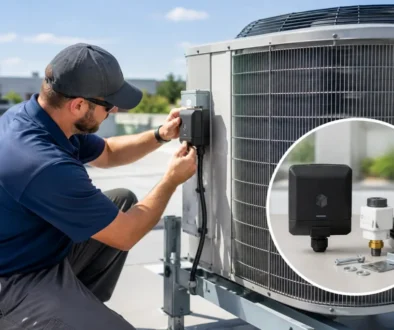
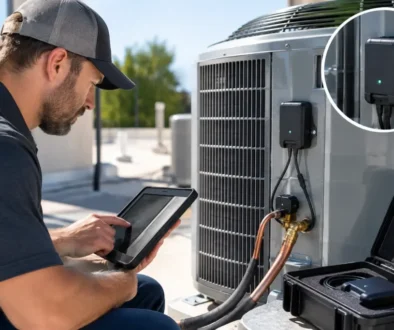
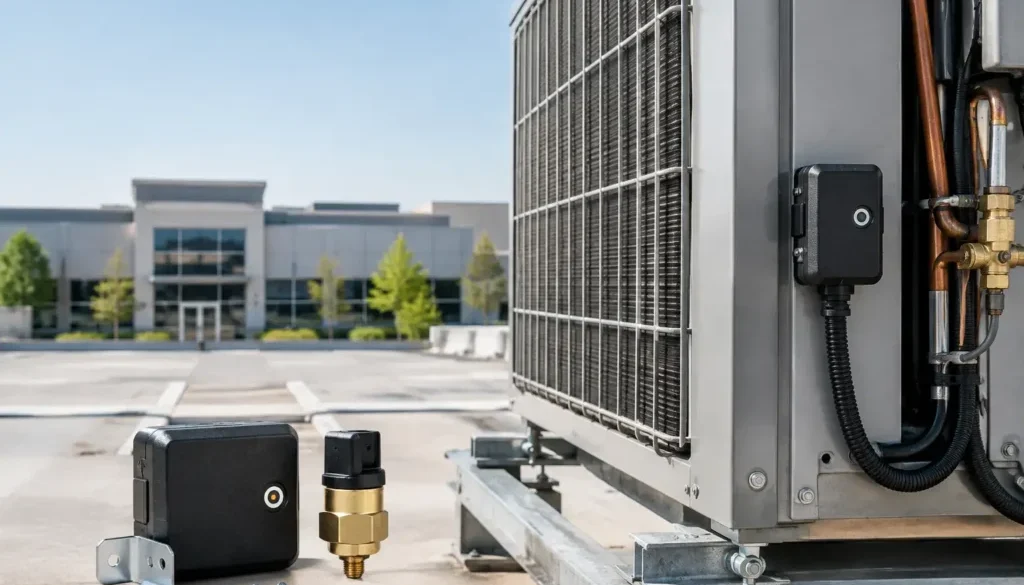
The CopperWatcher™ CW-3 monitors both electrical power and refrigerant pressure at the A/C unit. When it detects suspicious conditions, it communicates with the existing burglar-alarm system so the alarm siren can call immediate attention to the attempt. This approach focuses on early-stage detection instead of waiting for a door, gate, or motion sensor to happen to catch activity near the equipment.
That distinction matters at properties where condensers sit outside the usual alarm perimeter. A standard burglar alarm may protect doors, windows, and interior spaces very well while providing no direct supervision of the condenser itself. Adding purpose-built condenser detection extends the alarm strategy to the equipment that is exposed outdoors.
Detection also has to account for normal operations. HVAC equipment may be intentionally shut down for service, seasonal maintenance, tenant turnover, or a planned repair. A well-designed installation should distinguish an intentional A/C shutdown from a local power outage, helping reduce unnecessary alarm activations and the risk of municipal false-alarm fines. Exact setup and operating procedures should be reviewed with the installing alarm and HVAC professionals before the system is placed into service.
Coordinate the Alarm Contractor and HVAC Contractor
Condenser protection crosses two trades. The alarm contractor understands panel connections, alarm zones, supervision, notification paths, and local alarm requirements. The HVAC contractor understands refrigerant pressure, electrical disconnects, safe service practices, and the operating needs of the equipment. Involving both parties early avoids a system that is technically installed but difficult to service or operate.
Before work begins, define which condenser units are protected, where alarm wiring will run, where pressure-related components will be installed, and who will place the system in a maintenance or test condition during HVAC service. Document the panel zone description clearly. A vague label such as “outside equipment” slows down response; a specific description identifies the building, unit location, and equipment served.
The team should also agree on the response plan. If the alarm activates after hours, who receives the signal? Is the response through a central station, on-site security, a property manager, or another established procedure? How will authorized technicians know that an intentional shutdown requires the system to be put into the appropriate service state? Equipment protection is stronger when the operational process is as clear as the wiring diagram.
Test at Commissioning and After Meaningful Changes
A newly installed device should be tested with the alarm system, not merely powered up. Confirm that the panel receives the intended condition, the proper notification path is active, and personnel know what the event means. Keep records of the test, zone name, panel location, and responsible contacts.
Retest after changes that can affect performance, such as an alarm-panel upgrade, HVAC replacement, major refrigerant service, building renovation, or changes to monitoring procedures. A condenser may be protected on paper while a changed panel configuration or disconnected circuit prevents the intended signal from reaching the alarm system.
Make Service and Security Work Together
Many protection failures are procedural. A technician arrives for a scheduled repair, disables a device without documenting it, and the system is not restored. Or a property manager schedules a condenser replacement without notifying the alarm contractor. The result can be unwanted alarms during service or, worse, an unprotected unit afterward.
Use a short, repeatable service procedure. Authorized HVAC personnel should know whom to contact before work begins, how the alarm-related protection is handled during service, and how to verify restoration before leaving. Property staff should retain the procedure with their HVAC and alarm records, not in one employee’s inbox.
Inspect the physical environment at the same time. Check enclosure hardware, gates, lighting, landscaping, signage, camera views, conduit, and any visible wiring. Trim vegetation that creates concealment or blocks camera coverage. Repair loose fencing promptly. These are modest tasks, but they support the larger goal of making the condenser a less accessible and better-monitored target.
Prioritize the Sites Where Downtime Hurts Most
If a portfolio budget does not allow every condenser to be upgraded at once, prioritize based on consequence as well as exposure. Start with equipment supporting occupied multifamily buildings, medical or care-related spaces, food service, data or communications rooms, schools, high-traffic retail, and facilities with a history of repeated property intrusion.
Also weigh replacement lead times. A unit that can be repaired quickly may create a different business risk than specialized equipment with long replacement delays. The protection decision should reflect the cost of lost cooling, tenant disruption, emergency labor, and potential repeat exposure, not simply the value of recoverable copper.
A commercial condenser protection plan is most effective when it gives people a clear job: HVAC contractors maintain safe operation, alarm professionals integrate and test detection, and property teams keep the site environment and response procedures current. That coordinated attention gives an exposed condenser something more useful than a barrier alone: a timely chance to be noticed and protected before a theft attempt turns into a major interruption.