Alarm Relay Versus Cellular Alerts for A/C Theft
An outdoor condenser can be damaged in minutes once someone reaches its electrical disconnect or refrigerant lines. The practical question is not simply whether a property receives a notification. In the decision between alarm relay versus cellular alerts, the critical issue is what happens at the unit, at the property, and within the first moments of an attempted A/C theft.
For many commercial properties, schools, multifamily communities, retail sites, and vacant buildings, an immediate local alarm response is the most direct way to draw attention before a theft attempt turns into a costly HVAC outage. Cellular alerts can add valuable awareness, especially for remote or unoccupied properties. But they serve a different function than an alarm relay connected to an existing burglar-alarm system.
Alarm Relay Versus Cellular Alerts: The Core Difference
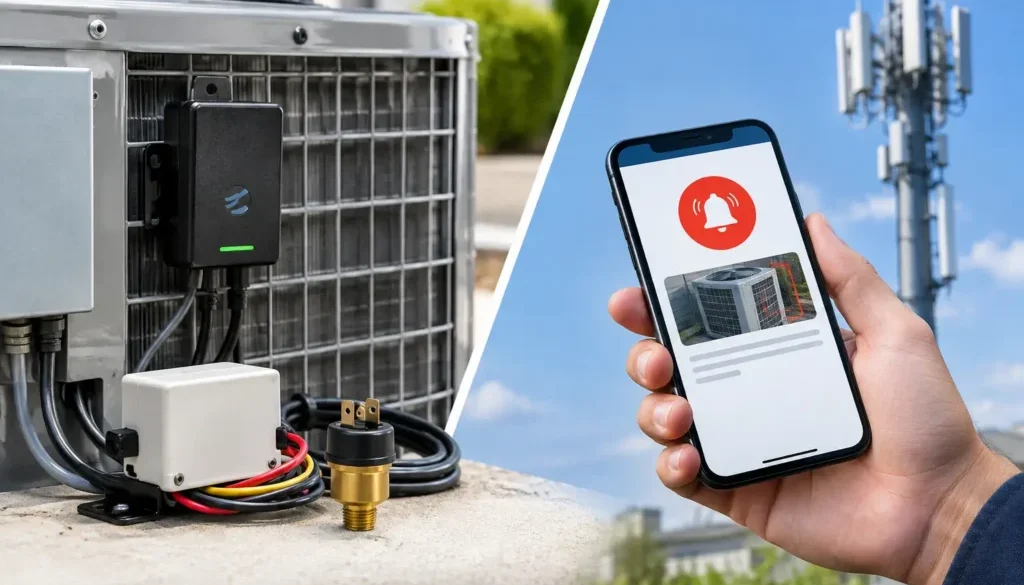
An alarm relay is a hardwired switching output. When a detection device recognizes an alarm condition, the relay changes state and communicates that condition to a compatible burglar-alarm panel. The panel can then activate the site’s siren, communicate to a monitoring service if the system is configured for it, and follow the alarm response programmed for that property.
A cellular alert sends a message through a cellular network to a phone, app, cloud platform, or monitoring workflow. It tells a designated person or service that an event has occurred. Depending on the system, that notification may be immediate, but it still relies on cellular signal, account configuration, device power, and someone seeing and acting on the alert.
That distinction matters at an exposed condenser. A relay is designed to initiate a local alarm-system response. A cellular alert is designed to inform people at a distance. Both can have a place in a security plan, but neither should be evaluated as though it performs the other’s job.
Why Immediate Local Response Matters at an A/C Unit
Copper theft and condenser vandalism often begin with recognizable actions: shutting off electrical power or cutting refrigerant lines. Detection at that stage gives the property its best opportunity to create attention before extensive damage occurs.
When an alarm relay activates the existing burglar-alarm system, the siren can sound at the property immediately. That audible response can alert occupants, employees, neighbors, security personnel, or others nearby. It also establishes an alarm event at the same system already used to protect the building.
A text message alone does not create that local presence. It may arrive when a manager is driving, asleep, in a meeting, or responsible for several locations. Even an attentive recipient must interpret the alert, decide what to do, and contact the appropriate party. Those steps can be appropriate for verification and follow-up, but they add time when the objective is to interrupt an active attempt.
This does not make cellular communication unnecessary. It means a property should avoid treating a remote notification as a substitute for an on-site alarm response where a compatible burglar-alarm panel is already in place.
The value of using existing alarm infrastructure
Most facility managers do not want another standalone system with another response process to manage. An alarm relay can use the property’s existing alarm panel, keypads, sirens, zones, monitoring relationship, and established operating procedures.
That integration can simplify the security plan. The A/C protection device identifies conditions associated with theft activity, while the burglar-alarm system performs the function it was built to perform: annunciating and communicating an alarm event according to the panel’s configuration.
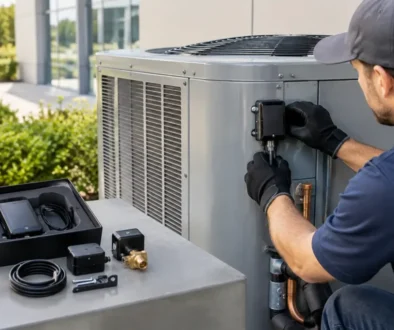
CopperWatcher™ CW-3 is designed around this approach. It monitors electrical power and refrigerant pressure at the condenser, then communicates suspicious conditions to the existing burglar-alarm system through an alarm relay. This allows property owners to add focused A/C theft detection without replacing the security infrastructure already protecting the site.
Where Cellular Alerts Are Useful
Cellular alerts are often worthwhile as a secondary layer of awareness. A facility manager may want confirmation that a site alarm occurred, especially when managing multiple buildings or locations with limited after-hours staffing. For vacant properties, cellular communication can help a responsible party know that an alarm condition needs attention.
Cellular-based alarm communicators can also support central-station monitoring when paired with a compatible alarm panel and service arrangement. In that configuration, cellular communication is not merely a phone notification. It becomes a transmission path for the burglar-alarm system to report an event off site.
The key is to evaluate the full response chain. Ask whether the cellular device receives an event directly from the detector, whether the alarm panel has already activated, whether a siren is sounding, who receives the message, and what action that person is expected to take.
Cellular alerts are especially useful when they supplement a local alarm response. They are less effective when they are the only planned response for an exposed condenser at a property where immediate attention could make a difference.
The Trade-Offs Property Owners Should Consider
There is no single response method that fits every site. The right choice depends on the property’s hours, location, exposure, existing alarm equipment, staffing, and operational requirements.
An alarm relay offers speed at the property and supports direct integration with the burglar-alarm panel. It is a strong fit for occupied commercial buildings, multifamily properties, schools, houses of worship, retail locations, and facilities with an existing security system. Its effectiveness depends on proper installation, a compatible panel zone, a functioning siren, and alarm programming that reflects the site’s response plan.
Cellular alerts offer visibility away from the property. They can help managers oversee distributed facilities and provide a record that an event was transmitted. Their trade-off is that notification does not automatically equal intervention. They also require ongoing attention to signal quality, account status, battery or backup-power considerations, recipient settings, and escalation procedures.
A combined approach may be appropriate for higher-risk sites. The relay can initiate the local burglar alarm, while the alarm panel’s communicator reports the event to a monitoring service or designated contacts. This preserves the immediate deterrent value of the siren while extending awareness beyond the property.
Avoiding Nuisance Alarms Is Part of the Decision
A/C equipment should not trigger an alarm every time it is intentionally serviced, shut down for maintenance, or affected by an ordinary operating condition. Nuisance alarms create unnecessary dispatches, disrupt occupants, and can contribute to municipal false-alarm concerns.
This is why detection logic matters as much as communication method. A system that monitors only one condition may not provide enough context to distinguish an intentional shutdown from a broader local power outage. Protection designed specifically for condenser theft should account for the actions associated with an attempt and be installed with the property’s equipment and procedures in mind.
For contractors, that means reviewing the alarm panel connection, identifying the proper zone type, following wiring documentation, and coordinating with the HVAC side of the installation. Pressure-switch setup and service procedures should be understood before the system is placed into operation. For property managers, it means ensuring that authorized maintenance personnel know how the protection system is handled during scheduled service.
Questions to Ask Before Selecting a Response Method
Start with the current security system. Does the property already have a working burglar-alarm panel and an exterior or interior siren that can respond to a dedicated A/C theft zone? If so, an alarm relay is often the logical foundation because it puts the site’s existing infrastructure to work.
Next, consider who is present when the equipment is most vulnerable. An occupied site may benefit greatly from an immediate siren. A vacant site may need both a local siren and off-site notification to ensure an alarm event is seen and addressed.
Finally, define the response before an event occurs. Identify who receives alerts, who can access the property, how alarm monitoring is handled, and how HVAC service is coordinated. A detection device is most valuable when it is part of a prepared, documented response plan.
Choose Response, Not Just Notification
The best A/C theft protection strategy focuses on stopping a theft attempt as early as possible, not merely documenting that something happened. For properties with existing burglar-alarm infrastructure, a relay-based connection provides a direct path to an immediate local response. Cellular communication can strengthen that plan by extending awareness to people who are off site.
Protecting outdoor HVAC equipment is ultimately about reducing avoidable loss, downtime, and disruption. Build the system around the response your property needs in the first critical moments, then make sure the right people are informed and ready to act.