Top AC Unit Security Devices for Theft Prevention
A stolen condenser coil is not a routine maintenance issue. It can leave a business, school, apartment community, or home without cooling while the owner faces equipment replacement, refrigerant work, alarm review, and possible operational disruption. The top AC unit security devices address different points in that risk: making the equipment harder to reach, making suspicious activity more visible, and sounding an alarm when a theft attempt begins.
The right choice depends on the property, the unit location, and the security system already in place. A fenced mechanical yard has different needs than a condenser behind a retail building, a rooftop unit, or equipment at a vacant property. The strongest plans usually combine physical protection with early detection rather than relying on a single barrier.
What top AC unit security devices should do
A useful security device should account for how condenser theft commonly unfolds. Access is gained to an outdoor unit, power may be shut off, and refrigerant lines may be cut to reach valuable copper components. A device that only makes a unit difficult to see or harder to access can slow an intruder down. It may not create an immediate response when the attempt starts.
For property owners and facility managers, evaluate each option against four practical questions: Does it deter casual access? Can it delay removal? Does it detect the specific actions associated with an attack? Can it notify people who can respond?
That last question matters. A camera may record an event, but recording alone does not necessarily draw attention while equipment is being damaged. A stand-alone siren may create noise, but its usefulness depends on where it is installed and whether anyone is nearby. Devices integrated with an existing burglar-alarm system can turn a condition at the condenser into an immediate, familiar alarm response.
Physical barriers: cages, guards, and fencing
Metal security cages are among the most visible AC unit security measures. A properly specified cage places a physical barrier around the condenser, limiting direct access to coils, refrigerant lines, and electrical components. For exposed ground-level equipment, that visible obstacle can discourage opportunistic tampering and add time to any attempted removal.
Cages have trade-offs. They must allow sufficient airflow and clear service access for HVAC technicians. A poorly designed or improperly installed enclosure can complicate routine maintenance, restrict access to disconnects, or interfere with the equipment’s operating requirements. The cage should be sized and installed with the condenser manufacturer’s clearances and local requirements in mind.
Fencing and locked mechanical enclosures can provide a broader perimeter layer where several units are located together. They are especially practical at commercial sites, schools, multifamily properties, and facilities with designated equipment yards. However, perimeter protection does not always identify an attack at a specific condenser, and gates, locks, and fence lines still require regular inspection.
Physical protection is most valuable when it is treated as a delay measure. It buys time. A detection system and alarm response make that time more useful.
Lighting and visible surveillance
Good exterior lighting removes concealment around outdoor HVAC equipment. Motion-activated lighting can be appropriate in low-traffic areas, while consistent site lighting may be a better fit for active commercial locations. The goal is practical visibility for tenants, staff, patrols, and cameras, not excessive illumination that creates glare or disturbs nearby occupants.
Security cameras add accountability and can help property managers review activity after an incident. Place cameras to capture approaches to the unit, access points, and faces where feasible. Confirm that foliage, parked vehicles, and seasonal changes will not block the view. Camera placement should also account for nighttime performance, retention settings, and who is responsible for checking alerts.
Lighting and video are worthwhile layers, but they are not direct confirmation that power has been interrupted or refrigerant lines have been cut. They work best alongside measures designed for the equipment itself.
Tamper switches and enclosure contacts
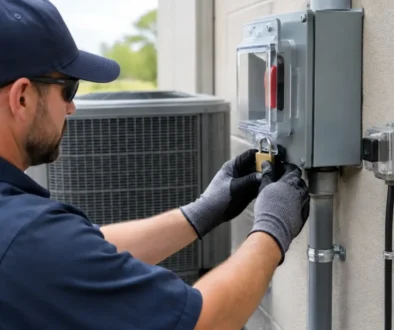
Door contacts, gate switches, and enclosure tamper devices can notify an alarm panel when a protected cabinet, cage, or mechanical-room door is opened. These devices are familiar to alarm contractors and can be a sensible addition when the protected area has a defined entry point.
Their limitation is straightforward: they detect movement at the enclosure, not necessarily a theft action at the condenser. If a unit is exposed outside a fence or if an offender can work around the protected entry point, a contact may not provide the earliest warning. Still, enclosure monitoring is useful as part of a layered plan, particularly for properties with secured yards or locked rooftop access.
Power-loss monitoring: valuable, but context matters
Because power is often interrupted before work begins on a condenser, power monitoring can be an effective theft-detection component. It can recognize an abnormal loss of electrical power at the protected unit and communicate that condition to an alarm system.
The challenge is distinguishing a suspicious shutdown from a legitimate HVAC service visit, a scheduled equipment shutdown, or a wider utility outage. A power-only device may require careful operating procedures to avoid unnecessary alarm activity. Facility teams should define who can disable or service the protected equipment and ensure alarm users understand the proper process.
A better approach considers the electrical condition in context with another theft-related event. That reduces the chance that an ordinary outage is treated the same way as an attack on the condenser.
Refrigerant-pressure monitoring and early theft detection
Refrigerant pressure is directly relevant to a condenser’s copper lines. When those lines are cut, the resulting pressure condition can be used as a meaningful indication that the unit is being attacked. Pressure monitoring moves beyond perimeter awareness and observes a condition at the HVAC equipment itself.
For this reason, pressure-based detection is often a strong fit for sites where replacement costs, downtime, or repeat exposure justify a more targeted solution. It should be installed and configured by qualified professionals who understand both HVAC equipment and alarm-system requirements. Pressure-switch setup, electrical connections, and service procedures all matter to reliable performance.
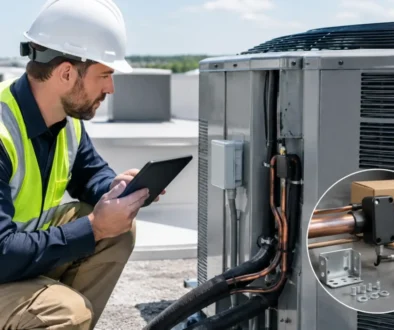
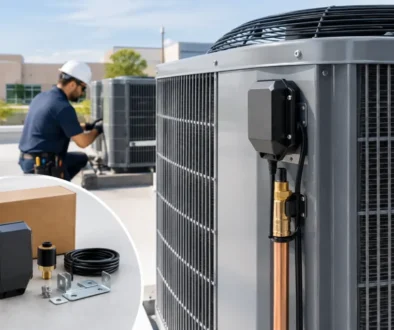
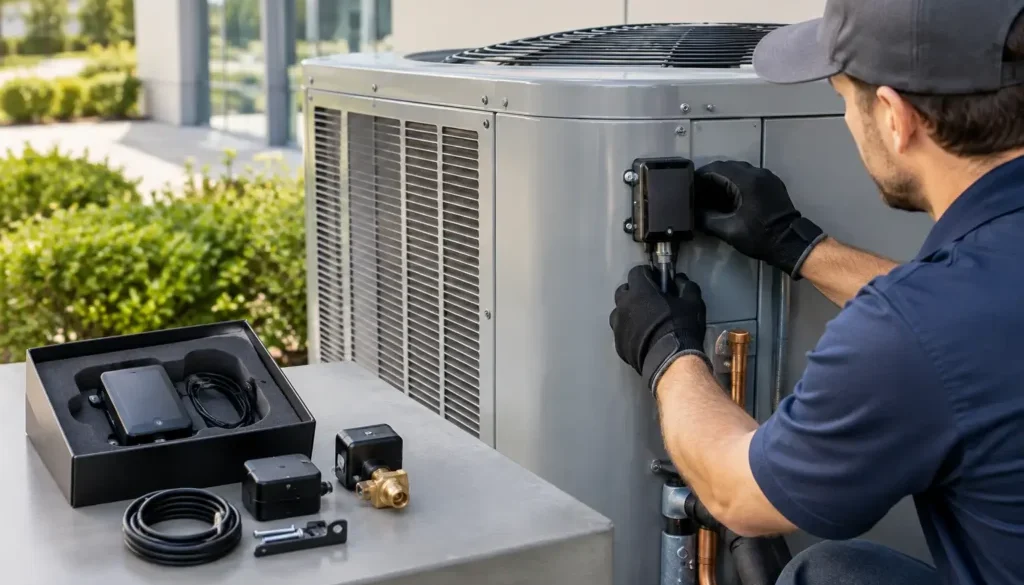
CopperWatcher CW-3 combines electrical-power monitoring and refrigerant-pressure monitoring to detect the two primary actions associated with condenser theft attempts: shutting off power and cutting copper refrigerant lines. It is designed to communicate with an existing burglar-alarm system so the site’s alarm siren can draw immediate attention to suspicious conditions. By evaluating both conditions, the system is intended to help distinguish an intentional AC shutdown from a local power outage, supporting early-stage detection while helping reduce avoidable false alarms.
This type of equipment-focused detection does not replace a full burglar-alarm system, proper HVAC service, or a response plan. It adds specialized protection where the loss begins: at the outdoor unit.
Choosing the right combination for your property
For a homeowner with one visible condenser, a protective cage, good lighting, and alarm-integrated detection may be a practical balance. For a retail site or small office with equipment behind the building, camera coverage and a clear response plan may be added to that foundation.
Larger facilities should take a site-specific approach. A multifamily community may need protection for multiple condensers near public or semi-public areas. A school or religious institution may need to coordinate alarm schedules, maintenance access, and staff notification. Vacant properties often benefit from layers that do not depend on someone being present at the moment suspicious activity occurs.
Before selecting equipment, document each unit’s location, exposure, electrical disconnect arrangement, refrigerant-line accessibility, existing alarm-panel capacity, and normal maintenance workflow. This gives alarm contractors, HVAC contractors, and security integrators the information needed to specify devices correctly. It also prevents a common mistake: adding a security product without planning how authorized service personnel will work around it.
Installation and maintenance determine performance
Even the best equipment needs a sound installation. Cages should remain secure without obstructing airflow or service access. Cameras need clean lenses, usable nighttime views, and confirmed recording. Lighting needs periodic checks. Alarm-integrated devices need proper wiring, testing, labeling, and documentation at the panel.
After installation, test the response path, not just the device. Confirm that the alarm panel receives the intended signal, the siren operates as expected, authorized contacts know what an alarm means, and the system is restored properly after HVAC service. Review these steps after changes to the HVAC equipment, alarm panel, tenant occupancy, or property-management staff.
The best protection is the one that detects trouble early enough to make a response possible while still fitting the way your property operates. Start with the condenser’s actual exposure, add physical delay where it makes sense, and connect targeted detection to the alarm infrastructure already protecting the site.