Top Multifamily HVAC Theft Deterrents That Work
A condenser theft at a multifamily property rarely ends with a single repair invoice. One cut refrigerant line can leave residents without cooling, create emergency calls for maintenance, damage the property’s reputation, and expose every similar unit on site as the next target. The top multifamily HVAC theft deterrents address that full risk by making equipment harder to reach, theft harder to complete, and an active attempt more likely to trigger an immediate response.
For owners and property managers, the goal is not simply to make a condenser look protected. It is to prevent copper thieves from completing the two actions that cause the most damage: shutting off power and cutting refrigerant lines. The strongest protection plan combines visible deterrence with alarm-based detection that can interrupt a theft before a unit is stripped.
Why Multifamily HVAC Equipment Is a Frequent Target
Multifamily communities often present conditions thieves look for: multiple outdoor condensers, predictable equipment layouts, accessible ground-floor units, dark side yards, and a large number of residents who may assume someone else is responsible for a noise or disturbance. A thief does not need to remove an entire condenser to cause major loss. Cutting copper line sets or opening a unit for its coil can disable the system in minutes.
The damage also extends beyond the scrap value of the stolen copper. Property teams may face coil or condenser replacement, refrigerant recovery and recharge, electrical repairs, after-hours labor, insurance deductibles, and resident concessions. During high-temperature periods, HVAC downtime can become a health, habitability, and retention issue.
Repeat theft is especially common when a property restores equipment without changing the conditions that made the first incident easy. A replacement condenser in the same exposed location can become a known opportunity rather than a resolved problem.
Top Multifamily HVAC Theft Deterrents: Start With Layered Protection
No single measure fits every community. A small garden-style property with individual condensers has a different exposure than a high-density apartment complex with mechanical yards, rooftop equipment, or centralized systems. Still, the most effective programs use layers that work together.
Physical barriers, site visibility, access control, and monitored detection each serve a different purpose. A cage may slow an intruder. Lighting may make the work less concealed. A camera may help document the event. Alarm detection can create an immediate consequence while the theft is underway.
The right mix depends on unit location, theft history, response capability, local ordinances, and whether the site already has a burglar-alarm panel that can be expanded to cover HVAC assets.
1. Use Purpose-Built Condenser Cages Where Access Is Easy
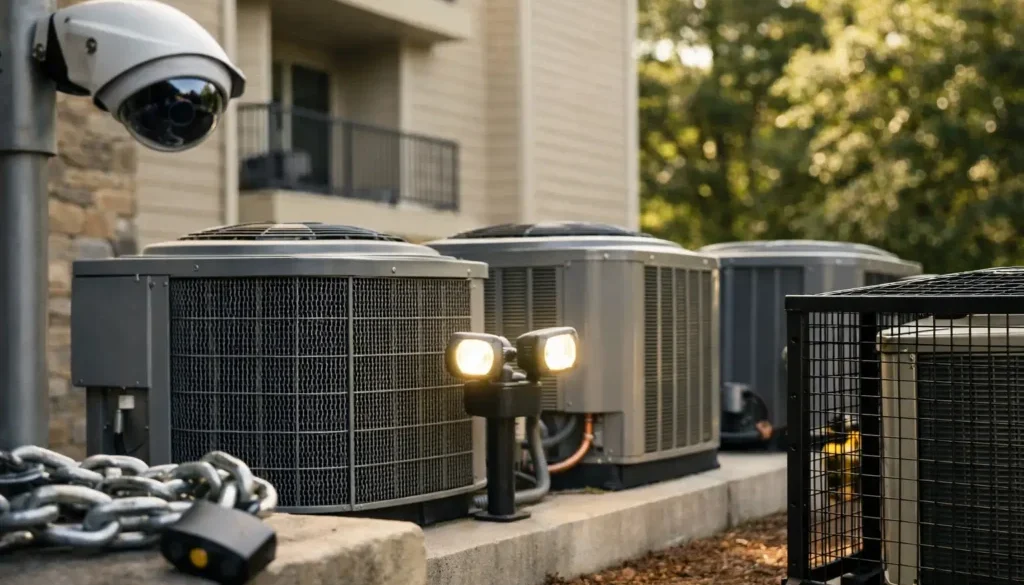
A properly designed cage or enclosure is a practical first layer for ground-level condensers. It creates delay, increases the noise and effort required to access the coil, and makes casual theft less attractive. For units near parking lots, alleys, sidewalks, vacant units, or rear property lines, a visible cage also communicates that the property is actively protected.
The trade-off is service access. A poorly selected cage can frustrate HVAC technicians, restrict airflow, or be left unsecured after maintenance. Specify a cage sized for the equipment, with adequate clearance, a serviceable locking method, and a process for confirming it is resecured after every visit. Cages should protect the coil area and vulnerable copper lines without creating a maintenance problem that staff will work around.
A cage alone is not an alarm system. Determined thieves may bring cutting tools, and a physical barrier does not notify anyone that an attempt is in progress. It is most valuable when paired with detection and a clear response plan.
2. Protect Refrigerant Lines, Not Just the Condenser Cabinet
Copper thieves often target the refrigerant line set because it can be cut quickly. Line-set guards, protective conduit, and tamper-resistant routing can reduce easy access to exposed copper between the condenser and the building. This matters at multifamily sites where units sit along exterior walls and line sets are visible from common areas or public approaches.
Protection should be installed with HVAC service requirements in mind. Refrigerant lines need appropriate clearance, insulation protection, and access for qualified technicians. Avoid improvised materials that trap moisture, damage insulation, or make future repairs needlessly difficult.
Walk the property after dark when evaluating exposure. A line set that appears reasonably concealed during the day may be easily reached from a shadowed walkway, landscaping bed, or adjacent parking space at night.
3. Add Lighting and Sight Lines That Remove Cover
Lighting is not a substitute for alarm detection, but it can change the conditions that allow theft to occur unnoticed. Motion-activated or scheduled lighting around condenser banks, mechanical enclosures, rear elevations, and dumpster areas can increase visibility for residents, patrol staff, and neighboring properties.
Landscape maintenance matters as much as fixtures. Overgrown shrubs, privacy fencing with blind corners, and stored materials can give thieves cover and conceal equipment from normal observation. Keep a clear sight line to exposed condensers where possible, especially in known problem areas.
Be deliberate about placement. Lighting aimed directly into windows can create resident complaints and may lead staff to disable it. The best installations illuminate equipment approaches and work areas while limiting glare into homes and common-use spaces.
4. Use Cameras for Verification, Not as the Only Defense
Cameras can support investigation, verify alarm activity, and help property teams identify patterns such as entry routes and repeat offenders. They are useful around equipment compounds, common condenser banks, gates, and perimeter approaches.
But cameras are often reactive. A recording of a thief cutting copper does not restore cooling to affected apartments or prevent emergency replacement costs. Cameras work best when tied to an operational response: someone receives the alert, can verify activity, and can dispatch security or law enforcement when appropriate.
For sites with limited monitoring resources, prioritize cameras at locations where they can support an alarm event rather than treating broad video coverage as a complete HVAC theft solution.
5. Detect the Theft Attempt at the Equipment
The most meaningful point of intervention is before the thief removes the copper. Because condenser theft typically requires power to be shut off and refrigerant lines to be compromised, detection that monitors those conditions can identify the attempt at its earliest practical stage.
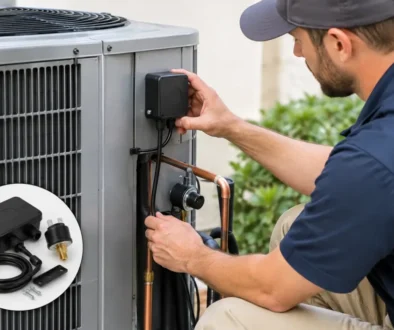
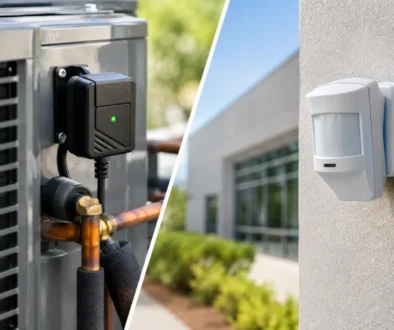
CopperWatcher is designed for this specific risk. Its CW-3 system monitors electrical power and refrigerant pressure at the A/C unit, then communicates compromised conditions to the property’s existing burglar-alarm panel. When the system identifies an intentional power shutdown or pressure loss consistent with cut refrigerant lines, the alarm siren can draw immediate attention to the event.
That distinction matters in multifamily environments. A simple power-loss device may activate during a local outage, causing nuisance alarms, resident disruption, and possible municipal fines. Intelligent logic that distinguishes an intentional shutdown from a broader power failure gives property teams a more usable security response.
For communities that already maintain burglar-alarm infrastructure, direct alarm-panel integration can be more practical than building a separate monitoring program for every condenser. Licensed alarm and HVAC contractors should coordinate installation so electrical connections, pressure-switch setup, alarm zones, and system testing are handled correctly.
6. Control Access to Mechanical Areas and Service Disconnects
The exterior disconnect is a common point of vulnerability because thieves may shut off power before cutting lines. Lockable disconnect covers, secured mechanical yards, controlled gates, and restricted roof access can add delay and make the shutdown less convenient.
These measures require careful coordination with electrical and HVAC code requirements. Equipment must remain safely serviceable by authorized technicians, and emergency access procedures should be clear. The objective is not to create an obstacle for legitimate maintenance. It is to prevent unauthorized access from being effortless.
At larger sites, document who has keys, codes, and access credentials. Former vendors, staff turnover, and shared mechanical keys can create overlooked gaps in an otherwise sound protection plan.
Build an Operating Plan Around the Deterrents
Equipment protection is only as effective as the response behind it. Property managers should identify every exposed condenser, note its unit number and location, photograph its current condition, and record prior incidents. This inventory helps teams spot repeat targeting and makes post-incident reporting faster.
Maintenance staff should know what to do when an alarm sounds or damage is found: preserve the scene, avoid touching cut lines or electrical components, contact the appropriate response personnel, document the loss, and begin resident communication. If several units are exposed in the same area, inspect them all. Thieves may damage multiple condensers during one visit, even when only one theft is immediately reported.
Residents can help, but they should not be asked to confront suspects. A simple communication process for reporting suspicious activity around equipment, especially after hours, can improve awareness without shifting security responsibility onto tenants.
The most useful next step is a nighttime walk of the property with your HVAC, security, and maintenance partners. Look at each condenser the way a thief would: Can it be reached easily, worked on unseen, shut down without resistance, and stripped before anyone notices? The answers will show where layered deterrence needs to begin.