Condenser Theft Risks at Exposed Properties
A condenser can be intact at closing time and left with severed copper lines before the next morning. That is the reality behind condenser theft risks: the loss is rarely limited to the scrap value of a few copper components. Property owners can face destroyed coils, refrigerant release, emergency HVAC service, business disruption, tenant complaints, and a site that becomes a repeat target.
For facilities with outdoor A/C equipment, the question is not whether copper has value. It is whether a thief can reach the equipment, disable it, cut the lines, and leave before anyone notices. Effective protection starts by treating the condenser as an operational asset that needs its own theft-detection strategy.
Why Condenser Theft Risks Create Outsized Losses
A thief may receive only a modest payment for stolen copper. The property owner pays for the full consequence of the damage. Cutting refrigerant lines can destroy a coil, contaminate the system, release refrigerant, and require a qualified HVAC contractor to inspect and repair more than the visibly damaged parts.
The cost grows quickly when the equipment serves occupied apartments, classrooms, retail spaces, offices, worship facilities, or temperature-sensitive operations. A damaged condenser can mean uncomfortable tenants and customers, missed operating hours, strained maintenance budgets, and rushed after-hours service calls. On a vacant property, the theft may remain undiscovered long enough for weather exposure or additional vandalism to make the repair more extensive.
Insurance does not remove the operational problem. A deductible, claim documentation, coverage limitations, and the possibility of higher premiums can leave an owner carrying substantial cost. Repeat incidents are especially damaging because each repair can signal that the same accessible equipment remains unprotected.
The Conditions That Increase Exposure
Most condenser theft is opportunistic, but opportunity is created by site conditions. Units located behind a building, along an unlit side yard, near alleys, or behind privacy fencing can offer concealment as well as access. A fence may keep casual foot traffic out while also blocking visibility from the street or neighboring businesses.
Vacancy is another major factor. Thieves often recognize properties with limited activity, dark windows, inconsistent maintenance, or no obvious response to after-hours noise. Yet occupied locations are not automatically safe. A large school campus after hours, a multifamily mechanical area, or a retail building closed overnight may offer long periods with little observation.
Equipment age and placement matter, too. Older condensers may contain more accessible copper, and ground-level units are generally easier to approach than equipment located on a secured roof or within a monitored enclosure. Sites with several condensers can be attractive because a thief can move from unit to unit once access has been gained.
Security managers should also look beyond the unit itself. An unlocked electrical disconnect, an exposed line set, poor exterior lighting, overgrown landscaping, and a delayed response process all reduce the time and effort required for a theft attempt.
The Two Actions Behind Most Theft Attempts
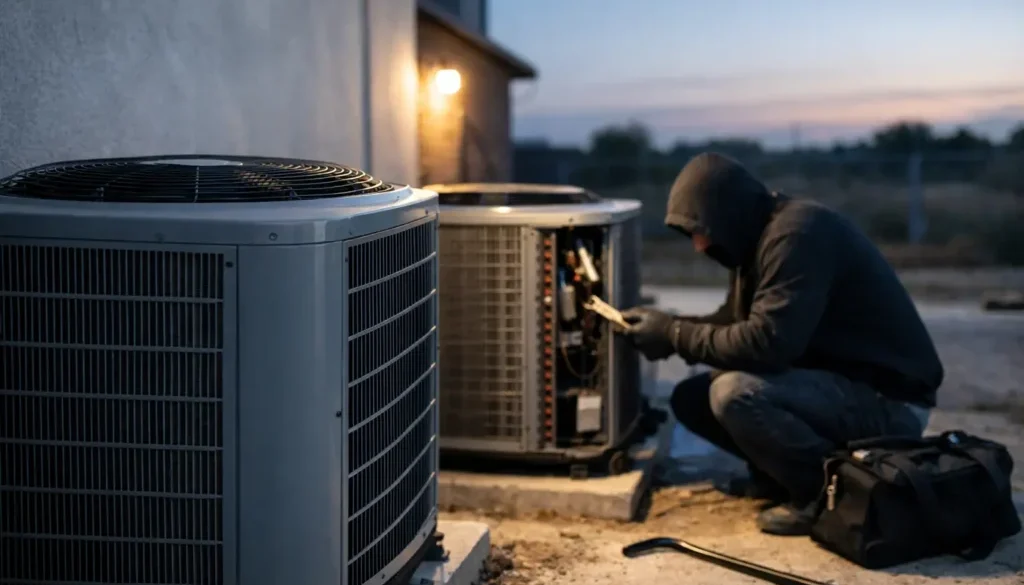
Condenser theft is not a random damage event. In many cases, the thief must take two recognizable actions: interrupt power to the A/C unit and cut the copper refrigerant lines.
Power is commonly shut off to reduce immediate equipment hazards and avoid drawing attention from a running system. The refrigerant lines are then cut to remove the coil or copper-bearing components. These actions create a practical opportunity for early detection, provided the protection system is designed around what is actually happening at the condenser.
This distinction is critical. A general perimeter alarm, camera, or motion detector may help document activity, but it may not identify the specific compromise at the equipment. Cameras also depend on placement, lighting, active monitoring, and a response fast enough to matter. Video of a completed theft is useful evidence, but it does not restore cooling or prevent the repair bill.
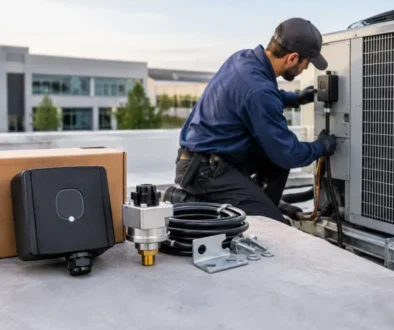
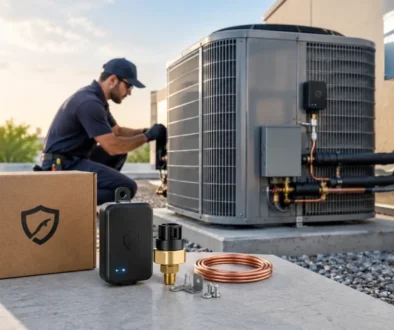
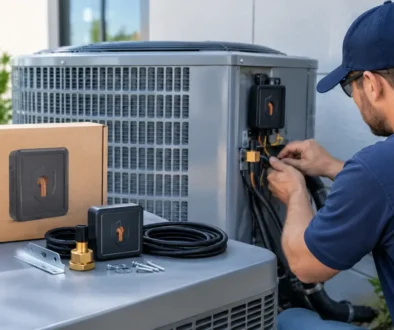
A specialized approach monitors the conditions that signal an attempted theft. CopperWatcher™ CW-3 uses both electrical power monitoring and refrigerant pressure monitoring to detect the core actions involved in condenser theft. When a compromised condition is detected, it communicates with the property’s existing burglar-alarm panel, allowing the audible siren to bring immediate attention to the attempt.
Why Alarm Logic Matters as Much as Detection
A system that alarms every time power is interrupted can create a different problem: nuisance activations. Properties experience utility outages, electrical service work, breaker issues, and scheduled HVAC maintenance. If a security device cannot distinguish an intentional shutdown at the condenser from a broader local power outage, false alarms can erode confidence and may expose the property to municipal fines.
That is why alarm logic deserves careful review during system selection. The objective is not simply to sense that something changed. It is to identify a pattern consistent with theft and create an alarm condition early enough to disrupt the event, while avoiding unnecessary activations during normal power interruptions.
Integration with an established burglar-alarm panel also has practical value. Facility teams do not need to build an entirely separate response process for a single asset class. The condenser protection can become part of the site’s existing alarm infrastructure, using the same siren, monitoring workflow, and escalation procedures already familiar to staff or alarm providers.
The correct setup depends on the property. A single residential condenser may require a straightforward installation and a clear homeowner response plan. A campus, multifamily portfolio, or retail center may need zone documentation, coordinated HVAC and alarm contractor work, and a process for placing equipment on test during service.
Reducing Condenser Theft Risks Before the First Loss
Physical hardening still has a place. Cages, fencing, tamper-resistant hardware, lighting, and landscaping improvements can increase the time and effort needed to reach a unit. They may discourage some thieves, particularly when combined with visible security measures.
But physical barriers have trade-offs. A cage must allow HVAC service access and airflow. It can be cut, pried, or bypassed. Fencing can create concealment if it is not designed with sightlines in mind. Cameras can help verify an event, but they do not necessarily stop it while the copper is being removed.
The strongest strategy layers delay with detection and response. Make the condenser harder to access, then create an immediate consequence when someone shuts off power and starts cutting refrigerant lines. The goal is to force a thief to abandon the attempt before the system is destroyed.
A practical site review should examine where each condenser sits, who can see it after dark, how easily a person can reach the disconnect, and whether the alarm system has a dedicated way to respond to a compromised unit. It should also identify response ownership. If a siren activates at 2:00 a.m., who receives the signal, who verifies the issue, and who can contact law enforcement or a service provider?
Coordination Between Security and HVAC Teams
Condenser theft prevention works best when security and mechanical decisions are made together. The alarm contractor understands panel integration, zone programming, supervision, and notification procedures. The HVAC contractor understands refrigerant pressures, equipment operation, service access, and the conditions that could affect the unit during normal maintenance.
Before installation, both teams should agree on equipment locations, wiring routes, pressure-switch setup, alarm-panel inputs, and test procedures. They should also document how planned service will be handled. A technician replacing a component or shutting down a unit should not trigger an avoidable dispatch, and a property should never leave a condenser unprotected because the system was disabled after service and not restored.
For owners managing multiple sites, standardization helps. Use consistent zone labels, installation records, maintenance instructions, and escalation contacts across the portfolio. This reduces confusion when a manager changes, a contractor is called after hours, or an alarm event occurs at a location that is not visited every day.
Treat an Attempted Theft as a Warning
An attempted condenser theft is not a minor incident simply because the copper was not removed. It is evidence that someone identified the site, reached the equipment, and tested the property’s defenses. Inspect all nearby units, confirm alarm operation, correct visibility and access weaknesses, and review whether the response was fast enough to be meaningful.
The best time to address condenser theft risks is while the A/C system is still operating, the coils are still intact, and the property has the option to prevent loss rather than finance recovery. A focused detection strategy gives owners and facility teams a better chance to make the first cut the moment that brings attention to the thief, not the moment the damage is discovered.