AC Power Shutoff Detection for Copper Theft
A condenser can be disabled in seconds. For a copper thief, shutting off the disconnect is often the first move before cutting refrigerant lines and removing a coil. Effective ac power shutoff detection recognizes that early action and turns it into a security event before a routine HVAC service call becomes a major loss, prolonged downtime, and a damaged property.
For property owners, facility teams, and alarm contractors, the goal is not simply to know that an air-conditioning unit has lost power. The goal is to determine whether someone has intentionally interfered with protected equipment and to make the existing burglar-alarm system respond quickly enough to discourage the theft attempt.
Why Power Shutoff Is an Early Theft Signal
Copper theft from outdoor HVAC equipment is a sequence, not a single event. A thief typically gains access to the condenser, opens or operates the local disconnect, cuts the refrigerant lines, and removes accessible copper components. By the time a technician finds an empty or damaged unit, refrigerant has escaped, the system is down, and replacement costs can extend well beyond the value of the stolen metal.
The local disconnect is especially significant because it is accessible and familiar to anyone working around HVAC equipment. It is also necessary for legitimate maintenance. That creates the central challenge: a security system must recognize an unauthorized shutoff without treating every scheduled service visit or neighborhood utility outage as a criminal event.
A basic loss-of-power signal alone is not enough. It can create nuisance alarms when a breaker trips, a utility transformer fails, or a broader outage affects the site. Nuisance activations waste response resources, disrupt occupants, and can lead to municipal false-alarm fines. Worse, repeated false alarms can cause staff to disregard the system when a real theft is underway.
What AC Power Shutoff Detection Must Distinguish
A useful detection strategy evaluates the location and context of the power loss. The difference between a deliberate local shutoff and a utility interruption matters.
When a thief opens the disconnect beside a condenser, the unit loses power while the rest of the property may remain energized. That is a localized condition and a meaningful indicator of tampering. In contrast, a utility outage can affect the building, the alarm panel, lighting, and other equipment. Treating those two conditions identically is how poorly designed monitoring produces false alarms.
For this reason, power detection should work with the property’s alarm infrastructure rather than operate as an isolated notification device. A properly configured system can communicate a compromised local condition to the burglar-alarm panel, allowing the site’s siren to draw immediate attention. The audible response is valuable because copper theft is often fast. The objective is to make the location conspicuous while the attempt is still in progress.
Power shutoff detection is strongest when it is paired with refrigerant-pressure monitoring. A shutdown may occur during authorized HVAC work. A pressure loss by itself can result from a mechanical failure. But a local power shutoff followed by a sudden pressure change presents a much clearer picture of a likely theft attempt.
Pairing Electrical and Refrigerant Evidence
The most practical A/C theft detection systems monitor the two actions that thieves must take: disable the equipment and cut the copper refrigerant lines. This layered approach is more dependable than relying on a cage, camera, motion detector, or power sensor alone.
A cage can slow access but may be cut, pried open, or bypassed. Cameras can document the crime, yet footage does not always stop a thief at the unit. Motion detection can be useful around a perimeter, but animals, landscaping, and normal property activity may complicate its use. Power monitoring identifies early interference, while refrigerant-pressure monitoring confirms the type of damage commonly associated with coil theft.
The trade-off is that a dual-condition system requires thoughtful installation and startup. The electrical connection must be made correctly, the pressure switch must be set for the operating conditions of the equipment, and the alarm panel zone must be programmed to match the intended response. Those steps are worthwhile because they help reduce unnecessary dispatches while preserving fast detection where it matters.
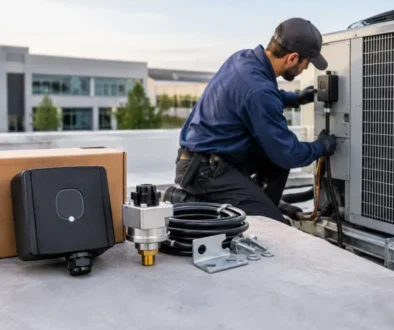
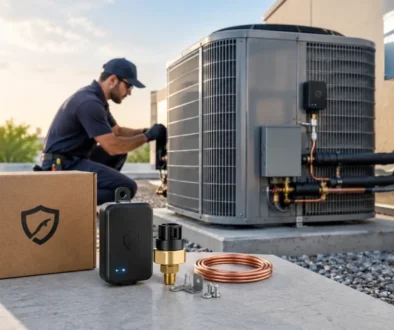
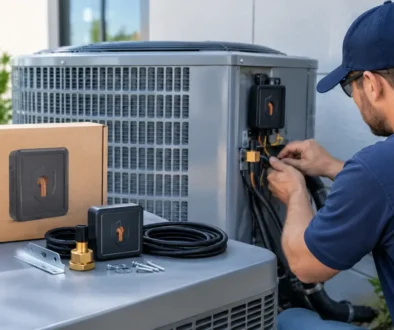
CopperWatcher uses this combined logic to monitor condenser power and refrigerant pressure, then communicate a compromised condition to an existing burglar-alarm panel. This approach protects the customer’s HVAC investment without requiring replacement of the site’s established alarm infrastructure.
Installation Decisions That Affect Reliability
The equipment is only as reliable as its installation and commissioning. Alarm and HVAC contractors should coordinate early, particularly on commercial and multifamily sites where HVAC equipment, electrical disconnects, alarm zones, and access procedures may be handled by different teams.
First, identify every condenser or split-system outdoor unit that is exposed and worth protecting. Theft risk is often higher at rear service areas, vacant suites, schools after hours, religious facilities, rooftop access points, and properties bordering alleys or unlit lots. Do not assume that a larger unit is the only target. Thieves may return to sites where they have already found easy access, even after a prior loss.
Next, verify the disconnect arrangement. The sensing method must identify a local equipment shutoff without confusing it with normal building power loss. Review the available alarm-panel zones, wiring paths, supervision requirements, and whether the panel is armed continuously or according to a schedule. A site that leaves its burglary system disarmed overnight will not receive the same protection as a properly managed 24-hour perimeter or equipment zone.
Pressure monitoring also requires attention to the mechanical system. The switch point should be established according to the equipment’s normal operating characteristics and the manufacturer’s setup instructions. A setting that is too sensitive may respond to ordinary service conditions or mechanical issues. A setting that is too lax may fail to provide the desired early warning after line cutting.
Finally, test the full sequence. Confirm that a simulated local power interruption produces the intended panel response, that pressure loss is detected as designed, and that restoration procedures are understood by the people who manage the property. Document the zone names clearly. “Rear condenser theft detection” is more useful to a responding employee or central station operator than a vague zone label.
Operating Procedures Matter After Installation
A protected condenser changes how service work should be managed. Facilities staff and HVAC contractors need a simple procedure for placing the affected protection point in test or service mode before planned work, then restoring it when the work is complete. This is not a weakness of the system. It is the discipline required to distinguish authorized maintenance from unauthorized interference.
Property managers should also decide who receives alarm notifications, who can verify activity on site, and who contacts the alarm provider after an activation. For a school, that may be a facilities director and security office. For a multifamily property, it may be the maintenance supervisor and an after-hours manager. A vacant retail site may require a different response plan, since there may be no one nearby to hear an interior alarm.
Keep records of every activation, service event, and actual power issue. Those records can reveal whether a unit is repeatedly targeted, whether a disconnect enclosure needs additional physical protection, or whether nearby lighting and access controls should be improved. They also support insurance claims when theft or vandalism does occur.
Where Detection Fits in a Complete Protection Plan
AC power shutoff detection is a focused theft-prevention measure, not a substitute for basic property security. It works best alongside visible address markings, controlled gates, maintained lighting, locked electrical enclosures where code and service access allow, and prompt repair of damaged fencing or doors.
The right mix depends on the site. A homeowner with one exposed condenser may prioritize an alarm-integrated detection device and lighting. A large apartment community may combine equipment-level detection with camera coverage and disciplined vendor access. A vacant commercial property may need additional perimeter hardening because thieves have more uninterrupted time to work.
What should not depend on the site is the need for early notification. Once copper lines are cut, the damage is done. Refrigerant release, damaged components, lost cooling, tenant complaints, business interruption, and replacement lead times can turn a small theft into a serious operational problem.
Protect the condenser before it becomes a repair ticket. Review exposed equipment, confirm how a local shutoff would be detected, and make sure the alarm response is ready before the next attempted theft gives someone a chance to test the property.