How to Integrate an AC Sensor With an Alarm
A condenser theft often starts quietly: someone shuts off power, opens the unit, and prepares to cut the refrigerant lines. By the time a standard door contact, camera review, or next-day service call reveals the damage, the coil may be gone and the building may be without cooling. To integrate an AC sensor with alarm infrastructure effectively, the detection strategy must recognize the actions that occur at the condenser itself, not simply report that an HVAC system has stopped running.
For property owners, facility teams, alarm contractors, and HVAC contractors, the objective is direct. Detect a credible tampering event early enough to activate the existing burglar-alarm siren and draw attention before copper is removed. That calls for the right sensor inputs, proper alarm-panel wiring, and logic that does not confuse a utility outage with criminal activity.
Why an AC Sensor Needs More Than Power Monitoring
Power loss is a meaningful signal, but it is not proof of theft. A condenser can lose power because a technician intentionally shut it down, a breaker tripped, a disconnect was opened for legitimate service, or the local utility experienced an outage. Connecting a simple power-loss relay to an alarm zone without considering these conditions can create nuisance activations, unnecessary dispatches, and potential municipal false-alarm fines.
A stronger approach monitors both electrical power and refrigerant pressure. Copper theft normally requires two actions: disabling the condenser and cutting copper refrigerant lines. When a pressure sensor detects a sudden loss of refrigerant pressure after the unit’s power has been compromised, the event is far more consistent with an active theft attempt than with a routine outage.
This two-condition approach matters especially at schools, churches, retail sites, multifamily communities, vacant buildings, and remote commercial properties. These locations may have several exposed units, limited overnight activity, and expensive consequences when one condenser is stripped. The loss is not limited to scrap-value copper. It can include replacement equipment, refrigerant, emergency labor, tenant disruption, business interruption, insurance claims, and repeat-crime exposure.
How to Integrate an AC Sensor With an Alarm Panel
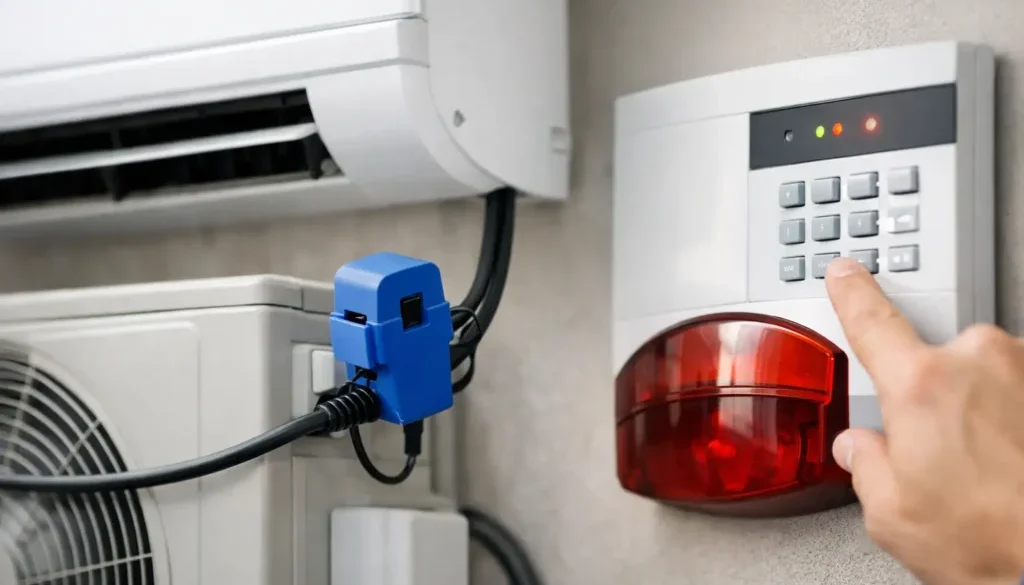
The best integration uses a dedicated, supervised alarm zone on the property’s existing burglar-alarm panel. The AC monitoring device should provide a dry-contact output or other alarm-compatible interface that changes state when its programmed theft conditions are met. The panel then treats that change as an intrusion or 24-hour supervisory event, based on the property’s monitoring plan and local alarm requirements.
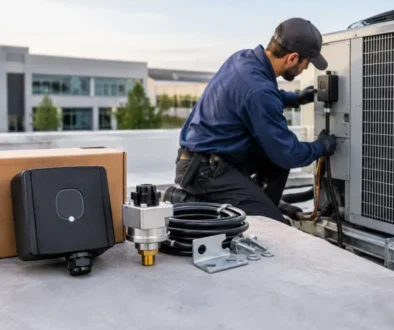
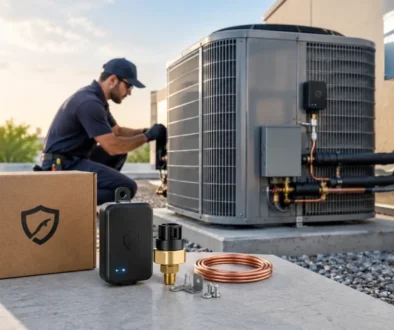
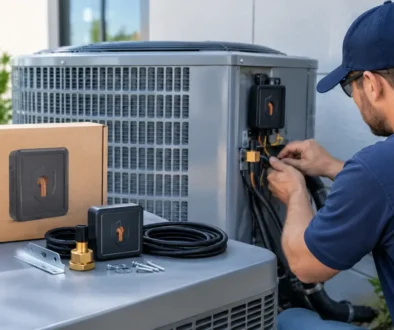
The basic physical path is straightforward: sensors observe conditions at the condenser, the controller evaluates those conditions, and a relay output connects to an available alarm-panel zone. The panel activates the on-site siren and, if the system is monitored, communicates the alarm to the central station.
The wiring details still deserve care. Alarm panels commonly supervise hardwired zones with an end-of-line resistor. That resistor allows the panel to distinguish a normal circuit from an alarm, a cut wire, or a shorted wire. The AC sensor’s relay must be wired according to the panel’s zone configuration and the sensor manufacturer’s instructions. A normally closed relay configuration is often preferred for security applications because a severed cable can be recognized as a trouble or alarm condition, but the correct choice depends on the specific panel programming and site design.
The alarm contractor should also identify whether the panel expects a normally open or normally closed input, where the end-of-line resistor belongs, and whether the selected zone should report as burglary, supervisory, or 24-hour audible. A zone that activates the siren immediately may be appropriate for an exposed condenser in a high-theft area. A monitored supervisory signal may fit other sites. The decision should reflect the property’s risk, response procedures, occupancy, and local regulations.
Keep the Detection Circuit Separate From HVAC Control
The security system should monitor the condenser without becoming the equipment’s primary operating control. Avoid using the alarm integration to interrupt compressor power, bypass factory safety controls, or alter thermostat operation unless the design specifically calls for it and a qualified HVAC professional approves the work.
This separation protects both systems. The HVAC technician can service the unit under normal procedures, while the alarm contractor can test and maintain the security zone without changing cooling operation. It also makes troubleshooting clearer. If the condenser fails to cool, the HVAC team can diagnose the mechanical or electrical issue without assuming the alarm circuit caused it.
Use Logic That Separates Theft From a Power Outage
False alarms undermine confidence in any security system. They also teach staff to treat alerts as background noise, which is the opposite of what a theft-prevention system should accomplish.
A condenser-specific sensor should evaluate the sequence of events, not just one condition. For example, an intentional shutdown followed by a refrigerant-pressure loss is a substantially different event from an area-wide outage where the refrigerant circuit remains intact. Likewise, normal compressor cycling should not resemble a theft condition.
This is where purpose-built equipment has an advantage over generic sensors. CopperWatcher CW-3 monitors both electrical power and refrigerant pressure, then communicates a compromised condition to the existing burglar-alarm panel. Its logic is designed to distinguish an intentional shutdown from a local power outage, helping properties avoid nuisance alarms while still responding when the copper lines are cut.
No system can eliminate every site-specific variable. Very old equipment, existing refrigerant leaks, unusual electrical configurations, and deferred maintenance can affect setup. Before commissioning, confirm that the unit is mechanically sound, that refrigerant pressure is within the expected operating range, and that the selected pressure-switch settings match the equipment and manufacturer guidance.
Installation Decisions That Affect Reliability
The alarm connection is only one part of a reliable installation. The sensor, wiring, conduit, and enclosure must withstand the same outdoor conditions as the condenser: heat, rain, vibration, landscaping activity, and deliberate tampering.
Place the controller and associated wiring where they are difficult to reach without opening the protected area. Protect exposed conductors in suitable conduit and secure cable runs so they cannot be casually pulled loose. If several condensers serve one building, decide whether each unit needs its own detection point and alarm zone. Individual zones provide clearer identification of the affected unit, while grouped zones may reduce panel capacity and installation cost. For high-value or frequently targeted equipment, individual identification is usually worth the added effort.
The alarm panel also needs adequate auxiliary power capacity. Verify the sensor’s voltage and current requirements, battery-backup expectations, and the panel’s available output capacity. If the device uses a separate power supply, make sure that supply is properly supervised where required. A security device that loses power silently during an outage or cable cut cannot provide the protection the property expects.
Coordinate the work between licensed alarm and HVAC professionals. The alarm contractor understands panel zones, supervision, reporting, and siren behavior. The HVAC contractor understands refrigerant circuits, service access, pressure conditions, and code-compliant work around the condenser. On sites with active service contracts, this coordination prevents a well-intended repair visit from creating an alarm event or leaving a sensor disconnected afterward.
Test the System as a Real Theft Event
A finished installation is not proven until it is tested at the panel, at the siren, and at the monitoring center if the account is professionally monitored. Put the account on test before any work that could generate a dispatch. Then verify that the panel recognizes normal status, alarm status, tamper or trouble conditions, and restoration.
Testing should confirm more than a relay click. Confirm that the correct zone description appears at the keypad or monitoring receiver, that the audible siren can be heard where it needs to be heard, and that staff know what an AC theft alarm means. A vague zone label such as “Aux 3” slows response. A label such as “North Roof Condenser 2 – Copper Theft” gives responders useful direction immediately.
Document the installation for future service. Record the protected unit, disconnect location, alarm zone number, resistor value, sensor settings, wire route, and the contacts responsible for HVAC and alarm service. This small step reduces confusion months later when equipment is repaired, replaced, or inspected.
Decide What Happens After the Siren Sounds
An audible siren is valuable because it creates attention at the earliest practical point in the theft attempt. But the response plan should extend beyond sound. Property staff, central-station operators, private security, and law enforcement contacts should understand the event type and site access procedures. If cameras cover the condenser area, make sure the alarm event helps personnel locate the relevant video quickly.
For repeat-target locations, pair sensor-based detection with practical hardening measures such as adequate lighting, maintained sightlines, locked access gates, and clear equipment identification. Physical barriers can slow an offender, but they may not alert anyone when the attack begins. Detection and audible alarm activation add the immediate response element that passive barriers cannot provide alone.
A protected condenser should not have to become a costly crime scene before it receives security attention. When the alarm zone is properly selected, the electrical and pressure conditions are evaluated together, and the system is tested with the people who will respond, the property gains a focused defense that acts while the theft attempt is still underway.