AC Theft Detection Versus Locks Compared
A condenser cage may be the first protection a property owner considers after a copper theft incident. It is visible, familiar, and can make access more difficult. But the right choice is not simply a question of AC theft detection versus locks. It is a question of when protection acts, what it can detect, and whether it helps bring attention to an attempted theft before an outdoor unit is disabled.
For commercial facilities, multifamily properties, schools, houses of worship, retail sites, and vacant buildings, a damaged condenser is more than a repair bill. It can mean uncomfortable occupants, disrupted operations, emergency HVAC service, insurance activity, and exposure to another attempt if the underlying security gap remains.
AC Theft Detection Versus Locks: The Core Difference
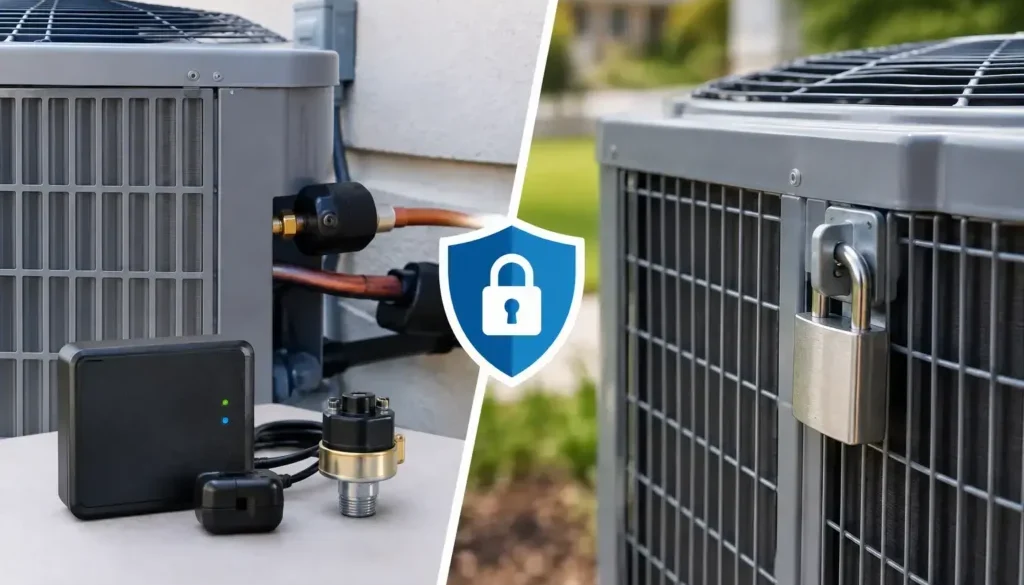
Locks and physical barriers are delay tools. Their purpose is to make a condenser harder or slower to access. A cage, grille, locking enclosure, or secured disconnect cover can discourage casual tampering and require additional effort to reach coils, refrigerant lines, or electrical components.
The limitation is that a lock does not normally notify anyone that someone is working on the unit. If a determined person has time, tools, or privacy, a barrier may be bypassed, cut, removed, or attacked. A strong enclosure can still be worthwhile, particularly where the unit is exposed or easily reached. It just should not be mistaken for active detection.
A theft-detection system is designed to recognize actions associated with an attempt and communicate with the existing burglar-alarm system. That changes the security objective from simply slowing access to drawing immediate attention while the attempt is underway. For properties where rapid response matters, that difference is significant.
Why Early Detection Matters at the Condenser
Copper theft from an air-conditioning unit commonly involves two actions: shutting off electrical power and cutting refrigerant lines. Those steps can leave the property with a disabled system even if the person does not remove every valuable component.
Early-stage detection focuses on those actions instead of waiting for a door to open, a motion detector to see movement, or a later inspection to reveal damage. When a system can identify suspicious power loss and refrigerant-pressure changes, it can signal the burglary panel to activate the site alarm. An audible siren can bring attention to the area at the moment it is most useful: during the attempt.
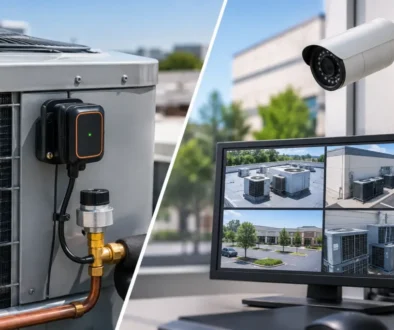
This approach also addresses a practical weakness of perimeter-only security. Outdoor condensers may sit behind a building, on a side yard, at a rooftop access point, or in an equipment area that is not covered by normal intrusion devices. The building may be protected while the HVAC equipment remains largely unmonitored.
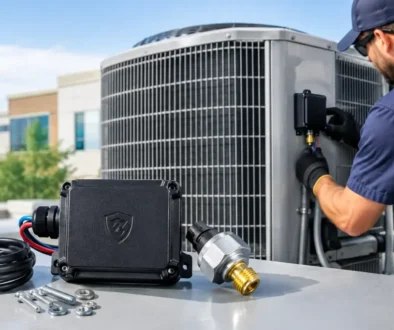
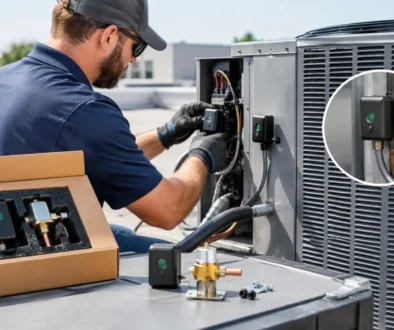
CopperWatcher™ CW-3 is designed for this specific application. It monitors electrical power and refrigerant pressure at the A/C unit, then communicates with the property’s existing burglar-alarm system when suspicious conditions occur. The system is intended to detect the primary actions tied to condenser theft attempts as early as possible, rather than serving as a replacement for the burglar-alarm panel, proper HVAC service, or a full property-security plan.
Where Locks Still Add Value
The comparison is not an either-or decision for every property. Physical protection can be a sensible part of a layered plan, especially when it is selected and installed with HVAC access and service requirements in mind.
A well-designed cage can discourage opportunistic tampering, limit direct access to vulnerable components, and create a visible signal that equipment is protected. At a vacant property or a site with equipment close to a public walkway, that added resistance may be valuable.
However, facility teams should assess the trade-offs before specifying a cage or locking enclosure. The equipment must remain accessible for licensed HVAC technicians. Airflow clearances must be maintained. The enclosure should not create a safety concern, interfere with code requirements, or make routine maintenance unnecessarily difficult. A poorly planned barrier can complicate service without providing the response capability the property needs.
Locks also depend on consistent use. A disconnect cover that is left unsecured, a gate that is not relocked after service, or a damaged cage that is not repaired promptly creates an opening. Detection adds another layer because its value does not rely solely on someone noticing a problem during a later walkthrough.
The False-Alarm Question
A common concern with any security device is nuisance alarms. An A/C unit can lose power for legitimate reasons, including a local outage, a service visit, or an intentional shutdown. A system that treats every power interruption as a theft attempt may create unnecessary dispatches, disrupt operations, and potentially expose the property to municipal false-alarm fees.
That is why the detection method matters. A purpose-built A/C theft device should evaluate the conditions around the equipment rather than rely on a simple single-event trigger. Monitoring both power and refrigerant pressure provides a more informed basis for identifying suspicious activity.
The CW-3 is designed to distinguish an intentional A/C shutdown from a local power outage, helping reduce avoidable alarm events. Proper installation, startup procedures, and pressure-switch setup remain essential. Alarm contractors and HVAC professionals should follow the applicable documentation and verify operation before the system is placed into service.
How to Choose the Right Protection Strategy
Start with the exposure, not the product. A single condenser behind a monitored, occupied building has a different risk profile than multiple units behind a vacant retail center or along the rear of a multifamily property. Consider visibility from public areas, nighttime lighting, recent tampering, existing camera coverage, alarm-panel availability, and how quickly personnel can respond to an alarm.
Then consider the consequence of downtime. A failed unit may be inconvenient at one location but operationally serious at a medical office, school, restaurant, server room, rental community, or business with customer-facing spaces. The higher the cost of disruption, the stronger the case for detection that can produce an immediate alarm condition.
For many sites, the most practical answer is layered protection: use an appropriate physical barrier to increase effort and pair it with targeted detection tied into the existing burglar-alarm system. The barrier may slow access. Detection can create attention when the attempt begins. Cameras and lighting can support investigation and visibility, but they should not be expected to perform the same role as an alarm response device.
Considerations for Contractors and Integrators
For alarm contractors, security integrators, and HVAC contractors, condenser protection is an opportunity to solve a defined customer problem without asking the customer to replace an entire security system. The key is coordination. The alarm professional needs to understand panel inputs, supervision requirements, annunciation, and testing. The HVAC professional needs to ensure the pressure-monitoring portion is installed and set up correctly for the equipment.
A clear handoff process helps avoid service confusion later. Document which condenser is protected, identify the alarm zone or point description, record setup information, and explain to the customer what to do before planned HVAC service. Property staff should know that routine maintenance and intentional shutdowns need to follow the established procedure so protection and operations remain aligned.
For multi-unit sites, standardizing the approach across buildings can also simplify maintenance records and alarm response instructions. That consistency matters when staff changes, properties are acquired, or a service call happens after hours.
Protection Should Create a Timely Response
A lock can be a useful obstacle. It cannot, by itself, tell a property manager, monitoring center, neighbor, or onsite employee that a condenser is being targeted. Detection provides that missing element by turning suspicious activity at the unit into an alarm event that can draw attention quickly.
The strongest decision is based on the property’s exposure, operational stakes, and existing security infrastructure. Choose barriers when they add meaningful delay, but prioritize early detection when the goal is to protect the condenser before a theft attempt becomes HVAC downtime, costly repairs, and another disruption for the people who rely on the property.